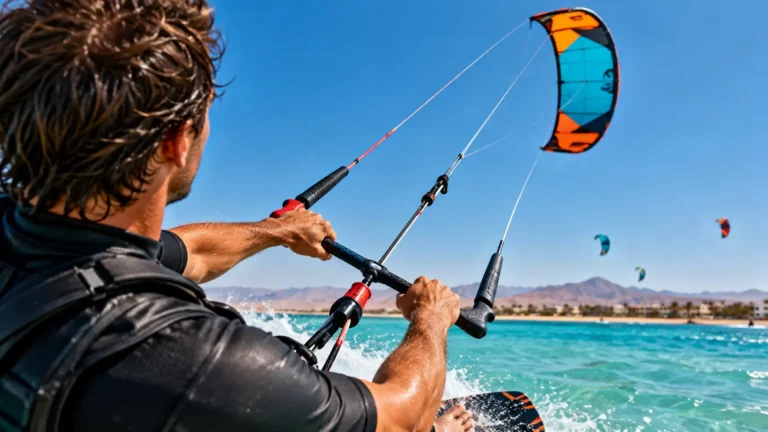

Landing your kite safely is just as important as launching it. While many riders focus on getting onto the water, accidents often happen at the end of a session. A poorly executed landing can cause the kite to regain power unexpectedly, drag the rider, or put nearby people at risk.
Whether you’re finishing a lesson, ending a long session, or coming ashore because the weather has changed, knowing how to land a kite correctly is an essential skill for every kitesurfer. In this guide, you’ll learn when to land your kite, how to perform both assisted and self-landings, and the common mistakes to avoid so you can finish every session safely.
How To Land A Kite Safely
The safest way to land a kite is with the assistance of another experienced kitesurfer. Bring the kite slowly to the edge of the wind window, maintain light line tension, and allow your assistant to secure the leading edge before releasing the bar. If no assistance is available, only perform a self-landing when you’re properly trained and the conditions are suitable.
Why Is Landing Your Kite Safely So Important?
Landing your kite correctly protects you, the people around you, and your equipment. Even a controlled session can end badly if the kite isn’t landed properly.
A powered kite can quickly become dangerous if it catches an unexpected gust during landing. Losing control at the final moment may result in damaged equipment, injuries, or the kite becoming airborne again.
Learning the correct landing technique helps you:
- Finish every session safely
- Reduce the risk of being dragged
- Protect other beach users
- Prevent unnecessary equipment damage
- Build confidence in different conditions
Professional instruction doesn’t just teach you how to ride; it also teaches you how to end every session responsibly.
When Should You Land Your Kite?
Landing should always be a planned decision rather than a last-minute reaction.
Many riders wait too long before returning to shore. By recognizing the right time to land, you can avoid unnecessary risks and stay in control throughout your session.
Consider landing your kite when:
- You’re finishing your session
- The wind becomes stronger than expected
- Storm clouds begin approaching
- You’re feeling tired
- Equipment appears damaged
- The beach becomes crowded
- Daylight is fading
Landing early is almost always safer than waiting until conditions become difficult.
The Safest Way To Land A Kite: Assisted Landing
An assisted landing is the safest and most widely recommended method because another experienced rider helps secure the kite before it can regain power.
This technique is used at most kiteboarding schools and is considered the standard procedure in normal riding conditions.
Step 1: Signal Your Landing Intention
Before approaching the beach, make eye contact with another experienced rider or beach assistant.
Use the internationally recognized hand signal to indicate that you’d like help landing your kite. Wait until the person clearly acknowledges your request before continuing. Never assume someone has seen you.
Step 2: Bring The Kite Slowly To The Edge Of The Wind Window
Steer the kite gently toward the edge of the wind window. Avoid sudden steering movements or diving the kite, as these actions can increase power and make the landing less predictable. Maintain smooth, controlled movements while keeping the kite stable near the edge of the window.
Step 3: Maintain Light Line Tension
Once the kite reaches the edge of the wind window, keep slight tension on the lines without pulling aggressively on the control bar. Stable line tension helps your assistant approach the kite safely while preventing unexpected movements. Avoid over-steering or making unnecessary corrections unless the kite begins drifting.
Step 4: Allow Your Assistant To Secure The Kite
Your assistant should approach from the leading-edge side and firmly hold the kite before giving you a signal that it’s secure. Only after the kite is fully under control should you slowly release pressure from the bar. Never let go of the bar before your assistant has complete control of the kite.
Step 5: Secure Your Equipment
After the kite is safely on the ground:
- Walk toward the kite to reduce line tension.
- Disconnect equipment only when appropriate.
- Secure the kite with sand or weights if necessary.
- Organize your lines before packing.
Taking a few extra minutes helps prevent tangled lines and prepares your equipment for the next session.
Common Mistakes During Assisted Landings
Even experienced riders can make avoidable mistakes.
The most common include:
| Mistake | Why It’s Dangerous |
|---|---|
| Diving the kite toward the beach | Increases power unexpectedly |
| Landing too quickly | Reduces control |
| Letting go of the bar too early | Kite may relaunch |
| Poor communication | Assistant may not be ready |
| Landing near people | Increases accident risk |
| Ignoring gusty conditions | Makes the kite unpredictable |
Most of these mistakes are easy to avoid by slowing down and following a consistent landing routine.
Why Professional Lessons Teach Landing Before Independence
Learning to ride is only part of becoming a safe kitesurfer. Professional instructors spend significant time teaching safe launching, controlled riding, and proper landing because these skills reduce the likelihood of accidents both on and off the water.
At Kiteboarding Ways, students practice safe landing procedures alongside essential riding skills, helping them build confidence before riding independently. Understanding how to finish a session safely is just as important as knowing how to start one.
How To Self-Land A Kite Safely
Self-landing should only be performed when you understand the technique, the conditions are suitable, and no experienced assistant is available. Although many riders use self-landing successfully, it requires more awareness and carries greater risk than an assisted landing.
If you’re still learning, always choose an assisted landing whenever possible.
Step 1: Choose A Safe Landing Area
Before attempting a self-landing, make sure the beach provides enough space for a controlled landing.
Look for an area that is:
- Free from people
- Away from vehicles and buildings
- Clear of trees, fences, and power lines
- Wide enough to accommodate your kite and lines
If the landing area isn’t safe, continue walking along the beach until you find a better location.
Step 2: Bring The Kite To The Edge Of The Wind Window
Steer the kite slowly toward the edge of the wind window, just as you would during an assisted landing. Avoid fast steering inputs or diving the kite, as these movements can generate unnecessary power and make the landing more difficult. The goal is to keep the kite calm, predictable, and lightly powered.
Step 3: Lower The Kite Gently Onto The Ground
Continue guiding the kite downward until the wingtip touches the beach. Allow the kite to settle naturally instead of forcing it onto the ground. Once the kite is resting securely, maintain control of the bar and continue monitoring the kite’s movement.
Step 4: Activate Your Safety System If Required
Depending on your equipment and the landing method you’ve been taught, you may need to activate your quick-release safety system to depower the kite completely.
Only do this if:
- You have practiced the procedure.
- The landing area is safe.
- You fully understand how your specific safety system works.
Every kite brand uses slightly different safety systems, so always follow the manufacturer’s recommendations.
Step 5: Secure The Kite Immediately
Once the kite is safely on the ground:
- Walk toward the kite carefully.
- Place sand or a suitable weight on the leading edge.
- Prevent the kite from catching the wind again.
- Organize your lines before packing your equipment.
Never leave an unsecured kite unattended, even for a few moments.
When Should You Avoid Self-Landing?
Self-landing isn’t appropriate in every situation. If conditions become unpredictable or the environment isn’t suitable, asking for assistance is always the safer choice.
Avoid self-landing when:
- Winds are strong or gusty.
- The beach is crowded.
- Obstacles are nearby.
- You’re unfamiliar with the location.
- You’re using new or unfamiliar equipment.
- Offshore winds are present.
- You don’t feel confident performing the procedure.
Good judgment is one of the most valuable safety skills any kitesurfer can develop.
Landing A Kite In Different Wind Conditions
Different wind conditions require different levels of caution.
| Wind Condition | Recommended Approach |
|---|---|
| Light Wind | Assisted or self-landing if trained |
| Moderate Wind | Assisted landing preferred |
| Strong Wind | Assisted landing strongly recommended |
| Gusty Wind | Wait for stable conditions or seek assistance |
| Offshore Wind | Avoid self-landing whenever possible |
| Storm Approaching | Return to shore early and land immediately |
Rather than waiting until conditions become challenging, experienced riders often end their sessions while everything is still under control.
Where Should You Never Land A Kite?
Even a perfect landing technique can become dangerous if you choose the wrong location.
Avoid landing your kite near:
- Roads
- Parked vehicles
- Buildings
- Trees
- Power lines
- Beach visitors
- Other kitesurfers launching or landing
- Rocky shorelines
- Narrow beach access points
Choose a wide, open area that gives both you and your kite plenty of space.
Pro Safety Tips From Experienced Riders
Small habits often make the biggest difference.
Experienced riders recommend:
- Always check your quick-release before every session.
- Never rush your landing.
- Watch the wind before approaching the beach.
- Communicate clearly with anyone assisting you.
- Practice emergency procedures regularly.
- Inspect your lines after every session.
- Ask for help whenever you’re unsure.
Safe riders aren’t the ones who never make mistakes; they’re the ones who consistently make good decisions.
How Kiteboarding Ways Teaches Safe Kite Landing
At Kiteboarding Ways, safe kite handling is treated as a fundamental part of every lesson—not just an advanced skill. Students learn how to assess landing areas, communicate with assistants, control the kite at the edge of the wind window, and finish each session safely before progressing to independent riding.
By practicing these techniques under professional supervision in El Gouna’s beginner-friendly conditions, students develop habits that improve both safety and confidence wherever they choose to ride in the future.
Final Thoughts
Landing your kite safely is one of the most important skills every kitesurfer should master. While exciting moments often happen on the water, the session isn’t truly over until your kite is safely secured on the beach.
For most riders, an assisted landing remains the safest and most reliable option. Self-landing is a valuable skill to learn, but it should only be used when you’ve been properly trained, and the conditions allow it.
Developing consistent landing habits protects not only you but also everyone sharing the beach. Like every other aspect of kitesurfing, good technique, preparation, and sound judgment make all the difference.
Frequently Asked Questions
What Is The Safest Way To Land A Kite?
An assisted landing with an experienced rider is considered the safest method because someone secures the kite before it can regain power.
Can You Self-Land A Kite?
Yes, but only if you’ve been trained and the conditions are suitable. Beginners should use assisted landings whenever possible.
Should Beginners Practice Self-Landing?
Beginners should first become comfortable with assisted landings before learning self-landing techniques under professional instruction.
Is It Safe To Land A Kite In Strong Winds?
Landing in strong winds requires extra caution. Whenever possible, use an assisted landing and avoid self-landing in gusty or challenging conditions.
Why Do Kites Relaunch During Landing?
A kite can regain power if it’s not fully secured, catches a gust of wind, or is released before it’s properly controlled.
What Should You Check Before Landing A Kite?
Check that the landing area is clear, the wind is suitable, your lines are free from tangles, and your quick-release system is functioning correctly.