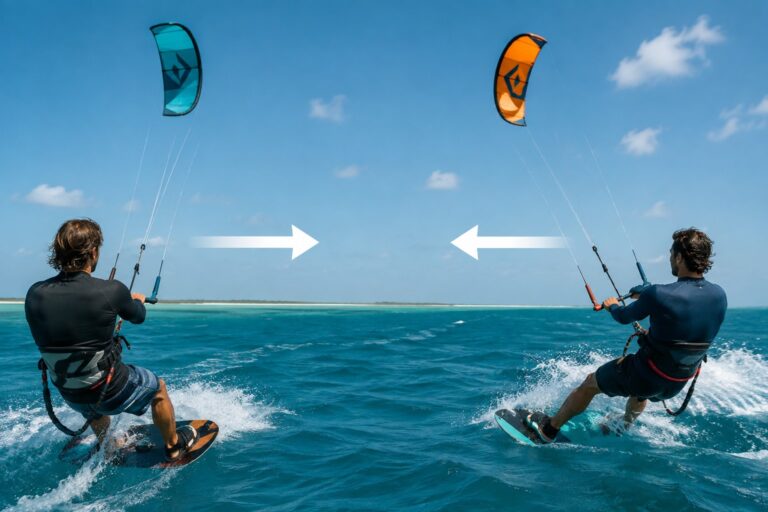

Choosing the right kiteboard can significantly impact how quickly you learn, how confidently you ride, and how much you enjoy every session on the water. While your kite provides the power, your board determines how efficiently you control that power, maintain balance, and adapt to different riding conditions.
One of the most common questions new and progressing riders ask is whether they should choose a Twin Tip or a Directional kiteboard. Both are excellent options, but they are built for different riding styles, water conditions, and skill levels.
In this guide, you’ll learn the key differences between Twin Tip and Directional kiteboards, discover which one suits your experience and goals, and avoid common buying mistakes. Whether you’re preparing for your first lesson or planning your next kiteboarding holiday in Egypt, this comparison will help you make an informed decision.
Twin Tip vs Directional Kiteboard
A Twin Tip kiteboard is the best choice for most beginners and freeride riders because it’s easier to learn, works equally well in both directions, and performs exceptionally in flat-water conditions. A Directional kiteboard is better suited to intermediate and advanced riders who want to ride waves, carve turns, and enjoy a surf-style experience.
If you’re buying your first kiteboard, a Twin Tip is almost always the smarter investment. If your goal is wave riding or surf-inspired kitesurfing, a Directional board is likely the better choice.
Twin Tip vs Directional Kiteboard At A Glance
If you’re short on time, this table highlights the biggest differences between the two board types.
| If You Want To… | Choose A Twin Tip | Choose A Directional |
|---|---|---|
| Learn kitesurfing faster | ✅ | ❌ |
| Ride comfortably in both directions | ✅ | ❌ |
| Practice jumps and freestyle tricks | ✅ | ❌ |
| Ride ocean waves | ❌ | ✅ |
| Enjoy surf-style carving | ❌ | ✅ |
| Ride mostly on flat water | ✅ | ⚠️ |
| Progress into wave riding | ⚠️ | ✅ |
| Buy one versatile board | ✅ | ⚠️ |
| Feel like surfing with a kite | ❌ | ✅ |
What Is The Difference Between A Twin Tip And A Directional Kiteboard?
The biggest difference is how each board is designed to ride. A Twin Tip has identical ends and can be ridden in either direction without turning the board around. In contrast, a Directional kiteboard has a distinct nose and tail and is designed to ride primarily in one direction, similar to a surfboard.
Although a kite powers both boards, they create completely different riding experiences. Understanding these design differences makes it much easier to choose the right equipment.
What Is A Twin Tip Kiteboard?
A Twin Tip is the most popular kiteboard in the world and the board almost every beginner learns on.
Its symmetrical shape means the front and back of the board are identical, allowing riders to travel left or right simply by changing their stance. There’s no need to rotate the board or reposition your feet during normal riding.
Because of this forgiving design, Twin Tips are ideal for building confidence while learning the fundamentals of kitesurfing.
A Twin Tip is commonly used for:
- Beginner lessons
- Freeride sessions
- Flat-water cruising
- Big air riding
- Freestyle tricks
- Everyday recreational kitesurfing
What Is A Directional Kiteboard?
A Directional kiteboard looks much more like a traditional surfboard. It has a clearly defined nose and tail, meaning it performs best when ridden in one direction.
Instead of simply switching stance, riders often perform a gybe or change foot position when changing direction. This requires more technique but offers greater control while surfing waves and carving smooth turns.
Directional boards are commonly used for:
- Wave riding
- Surf-style kitesurfing
- Downwind cruising
- Ocean swell
- Light-wind sessions
- Strapless freestyle
Many experienced riders eventually add a Directional board to their equipment collection after mastering the basics on a Twin Tip.
Why Board Choice Matters More Than Most Beginners Think
Many first-time riders focus almost entirely on choosing the right kite while overlooking the importance of selecting the right board. In reality, your board affects nearly every aspect of your progression—from learning your first water start to riding confidently upwind.
Choosing a board that matches your current ability helps you:
- Learn faster
- Build confidence sooner
- Reduce unnecessary frustration
- Improve overall control
- Progress more safely
On the other hand, buying a board designed for a riding style you’re not ready for can slow your progress and make learning more difficult than it needs to be.
Twin Tip vs Directional Kiteboard: Detailed Comparison
Now let’s compare both boards across the factors that matter most when deciding which one to buy.
| Feature | Twin Tip | Directional Kiteboard |
|---|---|---|
| Board Shape | Symmetrical | Surfboard Shape |
| Riding Direction | Both Directions | One Primary Direction |
| Beginner Friendly | ⭐⭐⭐⭐⭐ | ⭐⭐☆☆☆ |
| Learning Curve | Easy | Moderate |
| Flat Water Performance | Excellent | Good |
| Wave Performance | Good | Excellent |
| Freestyle Tricks | Excellent | Limited |
| Big Air | Excellent | Good |
| Surf Feel | Limited | Outstanding |
| Travel Convenience | Excellent | Good |
| Versatility | Excellent | Riding Style Specific |
| Typical Rider | Beginner to Advanced | Intermediate to Advanced |
This comparison shows that neither board is objectively better—they simply excel in different situations. The best choice depends on your experience, goals, and the conditions you expect to ride most often.
Which Board Should Beginners Choose?
For nearly every beginner, a Twin Tip is the better choice because it offers the fastest learning curve, greater stability, and much easier control.
When you’re learning to control both the kite and the board at the same time, simplicity matters. A Twin Tip removes many technical challenges, allowing you to focus on the skills that build confidence and independence on the water.
Professional kitesurfing schools around the world—including Kiteboarding Ways—primarily teach beginners on Twin Tip boards because they consistently produce faster and safer progression.
A Twin Tip helps beginners master:
- Water starts
- Riding in both directions
- Staying upwind
- Controlled stops
- First transitions
- Basic jumps
Is A Directional Kiteboard Too Difficult For Beginners?
Not necessarily—but it usually isn’t the most efficient way to learn.
While it’s entirely possible to start on a Directional board, doing so introduces additional challenges that most beginners don’t need during their first sessions. Riders must learn to manage foot changes, maintain balance differently, and adapt to a board that’s designed with wave riding in mind.
For this reason, many instructors recommend mastering the fundamentals on a Twin Tip before transitioning to a Directional board if wave riding becomes your long-term goal.
Which Board Matches Your Riding Style?
Your riding style is one of the most important factors when choosing between a Twin Tip and a Directional kiteboard. While both boards can be used in various conditions, each is designed to excel in specific disciplines.
If you’re unsure which board suits you, think about how you want to ride over the next few years rather than just your next session.
| Riding Style | Best Choice | Why? |
|---|---|---|
| Beginner Learning | ✅ Twin Tip | Stable, forgiving, easy progression |
| Freeride | ✅ Twin Tip | Versatile in most conditions |
| Big Air | ✅ Twin Tip | Better edge control and pop |
| Freestyle | ✅ Twin Tip | Ideal for jumps and tricks |
| Wave Riding | ✅ Directional | Designed to surf waves naturally |
| Strapless Freestyle | ✅ Directional | Better balance and maneuverability |
| Downwind Cruising | ✅ Directional | Smooth carving and efficient glide |
Which Board Performs Better In Different Water Conditions?
Water conditions have a huge influence on how your board performs. Choosing a board designed for your local riding environment makes every session easier and more enjoyable.
Flat Water Lagoons
Twin Tip boards dominate flat-water conditions because they provide excellent grip, stability, and control.
They’re perfect for:
- Learning new skills
- Freeride sessions
- Freestyle practice
- Big air progression
This is one reason why Twin Tips are so popular in destinations like El Gouna, where many lagoons offer smooth, shallow water that’s ideal for beginners and progressing riders.
Choppy Water
Twin Tips continue to perform well in moderate chop thanks to their balanced shape and ability to absorb uneven water.
Experienced riders can comfortably cruise, jump, and maintain speed without constantly adjusting their riding technique.
Ocean Waves
Directional kiteboards truly come into their own once waves become part of the session.
Instead of simply riding over waves, they allow riders to:
- Carve along the wave face
- Generate speed naturally
- Make tighter turns
- Ride with a surf-like feeling
If wave riding is your primary goal, a Directional board will almost always provide a more enjoyable experience.
Which Board Is Easier To Travel With?
Twin Tip boards are generally easier to travel with because they’re shorter, more durable, and fit comfortably inside most kiteboard travel bags.
For riders planning international kiteboarding holidays, portability is often an overlooked advantage.
Twin Tip Advantages
- Smaller overall size
- Easier airline packing
- Better protection during transport
- Lower repair risk
Directional Advantages
- Better for surf destinations
- Ideal if your holiday focuses on wave riding
- Worth carrying if waves are your priority
If your trip includes mostly flat-water riding, many travelers prefer taking a Twin Tip because it offers greater versatility without adding unnecessary bulk.
Cost, Durability & Maintenance Comparison
While both board types are available across a wide price range, Twin Tips are generally less expensive to own and maintain over time.
| Factor | Twin Tip | Directional |
|---|---|---|
| Initial Cost | Moderate | Moderate–High |
| Durability | ⭐⭐⭐⭐⭐ | ⭐⭐⭐⭐☆ |
| Repair Costs | Lower | Higher |
| Maintenance | Minimal | Moderate |
| Airline Convenience | Excellent | Good |
| Lifespan | Excellent | Excellent with proper care |
For riders purchasing their first board, a Twin Tip often delivers better long-term value because it requires less maintenance while supporting years of progression.
Which Board Is Best For Kitesurfing In Egypt?
For most visitors traveling to Egypt, a Twin Tip is the recommended choice because the country’s famous kiteboarding destinations feature large flat-water lagoons and consistent wind conditions.
Locations such as El Gouna are known worldwide for offering ideal learning environments where beginners and intermediate riders can progress quickly on Twin Tip boards.
However, riders looking to explore wave spots along parts of the Red Sea coastline may find a Directional board more rewarding.
If you’re unsure which equipment to use during your trip, experienced instructors can recommend the best option based on daily wind conditions, water state, and your riding ability.
How Kiteboarding Ways Helps You Choose The Right Board
At Kiteboarding Ways, choosing the right equipment is part of every learning experience. Rather than giving every student the same setup, our instructors recommend boards based on your experience, body weight, riding goals, and the day’s conditions.
Most beginners start on carefully selected Twin Tip boards because they provide the quickest progression in El Gouna’s shallow lagoons. As riders become more confident, we also introduce Directional boards for those interested in wave riding and surf-style kitesurfing.
This personalized approach helps students learn faster, ride more confidently, and enjoy every session with equipment that’s matched to their individual needs.
Final Verdict
Choosing between a Twin Tip and a Directional kiteboard isn’t about selecting the “better” board—it’s about selecting the right board for your current skills and future goals.
If you’re learning, riding mostly flat water, or want one versatile board that can handle almost everything, a Twin Tip is the clear winner.
If you’re an experienced rider chasing waves, carving turns, and a surf-inspired riding style, a Directional kiteboard will unlock an entirely different experience on the water.
The smartest riders don’t buy the board that looks the most advanced—they choose the board that helps them progress the fastest.
Frequently Asked Questions
Is A Twin Tip Better Than A Directional Kiteboard?
A Twin Tip is generally better for beginners, freeride, and freestyle, while a Directional kiteboard is better suited to wave riding and surf-style kitesurfing.
Which Kiteboard Should I Buy As A Beginner?
Most beginners should start with a Twin Tip because it’s easier to control, more forgiving, and helps riders progress faster.
Can I Learn Kitesurfing On A Directional Board?
Yes, but it usually requires more balance and technique. Most schools recommend learning on a Twin Tip first.
Do Professional Riders Still Use Twin Tip Boards?
Absolutely. Twin Tips remain the preferred choice for professional freestyle and big air competitions.
Is A Directional Board Faster Than A Twin Tip?
In wave riding and downwind conditions, a Directional board often feels smoother and more efficient. For jumps, freestyle, and general freeriding, a Twin Tip is usually the better performer.
Should I Own Both A Twin Tip And A Directional Kiteboard?
Many experienced riders do. A Twin Tip offers versatility for everyday sessions, while a Directional board is ideal for wave-focused days, giving you the best of both worlds.