There comes a point in every kitesurfer’s journey when the beginner phase is behind them, but advanced riding still feels a little way off. You can ride comfortably, stay upwind most of the time, and recover from mistakes without needing constant assistance. Yet despite regular sessions, progression often starts to slow down.
If that sounds familiar, a Red Sea kite safari could be exactly what you need.
Unlike traditional kite holidays that keep riders at the same beach every day, a safari provides access to multiple lagoons, consistent wind, and significantly more time on the water. For many intermediate riders, it becomes the experience that transforms confidence into genuine independence.
Why Intermediate Riders Often Progress Faster On Safari
Many riders assume kite safaris are designed only for advanced kitesurfers. In reality, intermediate riders are often the group that benefits the most.
At this stage, you already understand the fundamentals of kite control and board riding. Instead of learning basic skills, your goal becomes refining technique, building consistency, and spending more quality time on the water.
A safari naturally creates the perfect environment for that progression.
The Intermediate Plateau Most Riders Experience
Many riders eventually reach a stage where improvements become slower.
You may already be able to:
- Ride both directions
- Stay upwind
- Relaunch your kite independently
- Perform basic transitions
However, progression can stall when sessions become limited by crowded beaches, inconsistent wind, or lack of riding time. This is where a safari often changes everything.
Why More Water Time Matters
One of the biggest advantages of a kite safari is the amount of riding time available.
Instead of planning your day around a single beach session, a safari allows riders to take advantage of multiple sessions throughout the day. The combination of consistent wind and repeated practice creates faster skill development.
More riding time often leads to:
- Better board control
- Improved transitions
- Increased confidence
- Cleaner riding technique
- Stronger wind awareness
For many riders, a week on safari provides more quality practice than several weeks of occasional sessions at home.
Skills That Often Improve During A Safari
Riding Upwind More Consistently
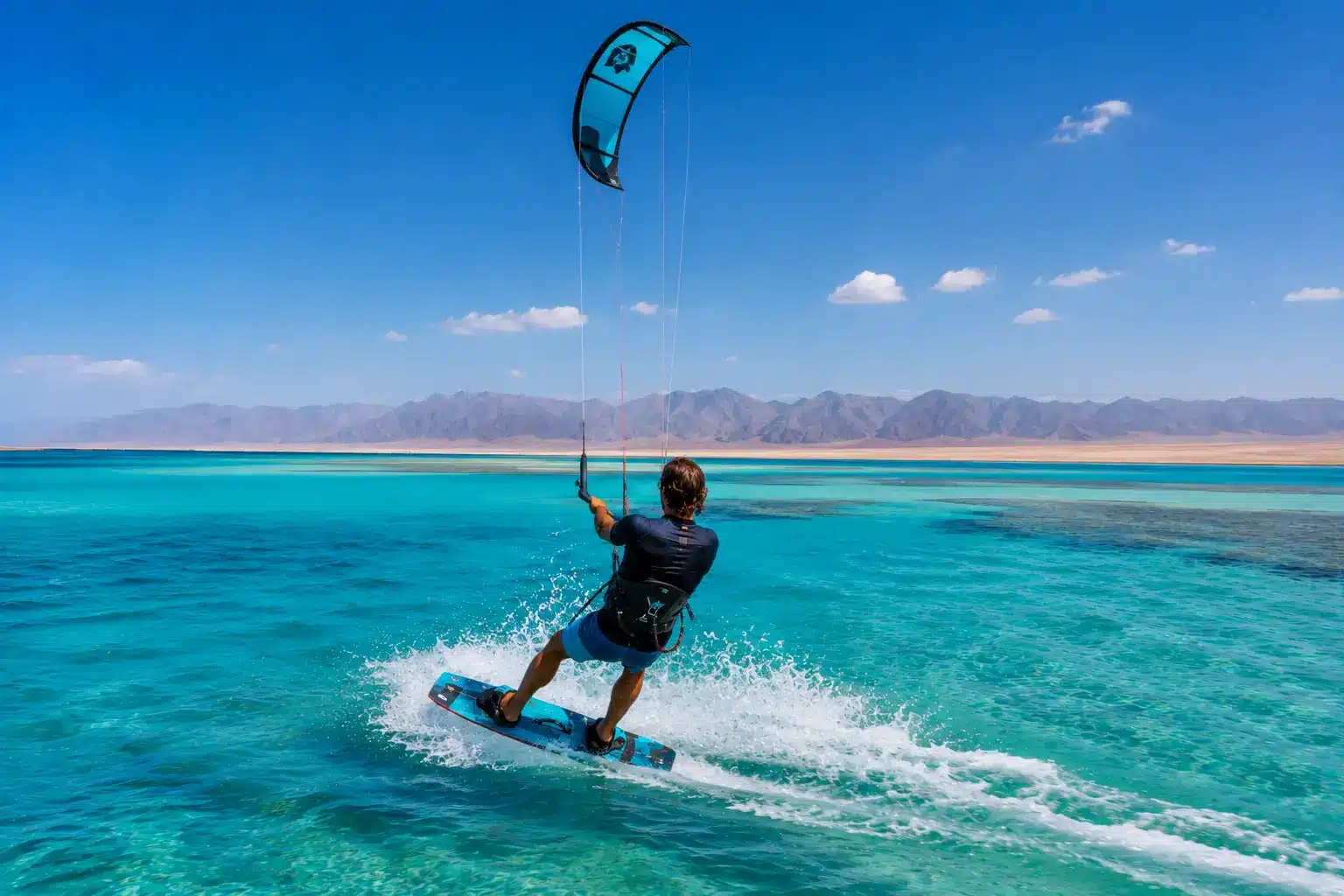
Long open lagoons provide ideal conditions for refining the upwind technique. Without crowded beaches or obstacles, riders can focus entirely on board position and edging.
Smoother Transitions
Flat water makes it easier to practice turning and changing direction repeatedly. Many riders leave a safari with noticeably cleaner transitions than when they arrived.
Better Kite Control
Multiple daily sessions naturally improve kite handling. Riders become more comfortable adjusting power, timing movements, and reacting to changing wind conditions.
Increased Confidence
Confidence often grows quickly when riders spend several consecutive days in consistent conditions. Small successes begin adding up, making challenging skills feel more achievable.
Improved Wind Awareness
By spending a week focused on riding, many intermediate kiters develop a better understanding of wind direction, strength, and positioning.
Are You Ready For A Kite Safari?
Before booking, it helps to honestly evaluate your current ability.
| Skill | Ready For Safari? |
| Ride both directions confidently | ✅ |
| Stay upwind consistently | ✅ |
| Relaunch the kite independently | ✅ |
| Recover your board without assistance | ✅ |
| Understand basic self-rescue | ✅ |
| Ride comfortably in moderate wind | ✅ |
If most of these skills feel comfortable, you are likely ready to enjoy a Red Sea kite safari.
What If You’re Not Quite Ready Yet?
Not every rider reaches safari-ready level at the same pace, and that is completely normal. If you are still working on staying upwind consistently, improving transitions, or building confidence in stronger wind, a few additional lessons can make a significant difference.
Many riders choose to take Kitesurfing Lessons In El Gouna before joining a safari. The combination of professional coaching, flat-water lagoons, and reliable Red Sea wind helps riders develop the independence needed to enjoy a safari safely and confidently. In many cases, just a few extra training sessions can transform a future safari from a challenging experience into an enjoyable and highly rewarding progression trip.
Why Flat-Water Lagoons Accelerate Progression
The learning environment matters just as much as the rider.
Egypt’s Red Sea is famous for:
- Flat-water lagoons
- Reliable thermal wind
- Warm temperatures
- Large open riding zones
Without waves disrupting practice, intermediate riders can focus entirely on improving technique. This allows progression to happen more naturally and with less frustration.
It is one of the reasons Egypt continues attracting riders from Germany, France, Switzerland, Austria, Italy, Spain, the UK, and other international destinations.
A Typical Day For An Intermediate Rider On Safari
Imagine waking up anchored beside a quiet lagoon with steady wind already building.
After breakfast, you launch for the first session of the day and spend time improving transitions and riding efficiency. Following lunch onboard and some recovery time, another session gives you the chance to work on confidence, longer runs, and stronger wind management.
As the day winds down, many riders head out again for a final sunset session before returning to the yacht for dinner and relaxation.
The combination of riding, recovery, and repetition creates an ideal progression environment.
Kite Safari vs Kite Camp For Intermediate Riders
Both kite safaris and kite camps can help intermediate riders progress, but the overall experience is very different. A kite camp typically offers a fixed location with structured lessons and easy access to local facilities, while a kite safari focuses on maximizing riding time by moving between remote lagoons and following the best wind conditions. For riders who are already independent on the water, a safari often provides more variety, more riding opportunities, and a faster path to progression through consistent practice in ideal Red Sea conditions.
Both options can be valuable, but they offer different experiences.
| Factor | Kite Safari | Kite Camp |
| Riding Time | Usually higher | Moderate |
| Spot Variety | Multiple lagoons | One main location |
| Progression Opportunities | Excellent | Good |
| Social Experience | Small onboard group | Resort atmosphere |
| Wind Optimization | High | Limited to local conditions |
| Best For | Independent intermediates | Beginners and intermediates |
For many riders who already have the basics, a safari provides more riding opportunities and greater variety.
What Progress Can Intermediate Riders Expect?
Every rider develops differently, but many notice significant improvements during a single safari week.
| Skill Area | Typical Improvement |
| Upwind Riding | More consistent |
| Transitions | Smoother and cleaner |
| Kite Control | Better timing and confidence |
| Riding Endurance | Longer sessions |
| Wind Awareness | Improved decision-making |
The combination of repetition and consistent Red Sea conditions often accelerates learning far beyond occasional weekend sessions.
The Mistake Some Intermediate Riders Make
One common mistake is believing they need advanced tricks before joining a safari. Many riders wait until they can jump confidently or perform complex maneuvers. In reality, intermediate riders are often at the ideal stage to benefit from the experience.
By staying only at beginner-friendly spots, some riders unintentionally limit their progression potential. A safari provides the challenge, variety, and riding volume needed to continue moving forward.
Why Many Returning Riders Choose Kiteboarding Ways
Many guests arrive at Kiteboarding Ways looking for more than another standard kite trip. They want consistent conditions, meaningful progression, and access to some of the Red Sea’s best riding locations.
By combining wind-focused route planning, carefully selected lagoons, and local expertise, Kiteboarding Ways creates an environment where riders can focus on improving while enjoying the adventure of life on the water.
This balance of progression and exploration is one reason many guests return for future safari experiences.
Beyond Progression: The Experience Itself
While many riders join a safari to improve their kitesurfing skills, the memories they take home often extend far beyond progression alone.
Spending days surrounded by remote lagoons, crystal-clear waters, and peaceful Red Sea sunsets creates a unique atmosphere difficult to find elsewhere. With each day shaped by wind conditions and time on the water, the experience begins to feel less like training and more like fully immersing yourself in the kitesurfing lifestyle for an entire week.
Final Thoughts
Many riders spend months trying to break through the intermediate plateau. A Red Sea kite safari offers something difficult to recreate elsewhere: consistent wind, multiple daily sessions, and the freedom to ride in uncrowded lagoons designed for progression.
For riders who can already stay upwind and ride independently, a safari often becomes the experience that transforms confidence into genuine mastery. Long after the trip ends, many remember not only how much they improved, but how much fun they had doing it.
Frequently Asked Questions
Is A Kite Safari Good For Intermediate Riders?
Yes. Intermediate riders are often the group that benefits most, as they already have the independence to enjoy long riding sessions while still having plenty of room for progression.
Do I Need To Jump Before Joining A Safari?
No. Most safaris do not require jumping ability. Being able to ride independently and stay upwind is usually far more important.
Can Intermediate Riders Progress Faster On A Safari?
Yes. Multiple daily sessions, consistent wind, and large riding areas create ideal conditions for faster progression.
What Skills Should I Have Before Booking?
You should be comfortable riding both directions, staying upwind, relaunching the kite independently, and understanding basic self-rescue procedures.