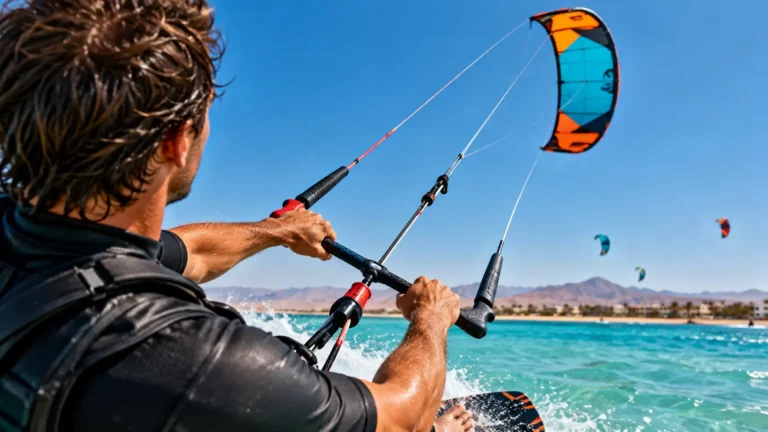
Every kitesurfer hopes they never need to perform a self-rescue, but every rider should know exactly how to do one. Equipment failures, sudden weather changes, or dropping wind can happen even on well-planned sessions. Knowing how to respond calmly in these situations can make the difference between a minor inconvenience and a serious safety issue.
Self-rescue is not an advanced trick or a skill reserved for experienced riders. It is a fundamental safety technique that every kitesurfer should learn before riding independently. In this guide, you’ll learn when a self-rescue is necessary, how to perform it correctly, common mistakes to avoid, and why practicing it builds confidence on the water.
What Is Self-Rescue in Kitesurfing?
Self-rescue in kitesurfing is a safety procedure that allows a rider to return to shore using their kite and equipment when they can no longer ride normally.
Instead of relying on a rescue boat or outside assistance, the rider secures the kite, manages the lines safely, and uses the kite as a flotation aid or sail to make a controlled return. Every reputable kitesurfing school teaches this technique because unexpected situations can occur even in ideal conditions.
Learning self-rescue is not about expecting problems; it is about being prepared to handle them safely if they happen.
Why Every Kitesurfer Should Learn Self-Rescue
Every kitesurfer should learn self-rescue because it prepares them to respond safely when riding is no longer possible.
No matter how experienced you become, there are situations where continuing to ride simply is not the safest option. Wind conditions can change unexpectedly, equipment can fail, or you may drift farther from shore than planned. Knowing how to perform a self-rescue helps you stay calm, protect your equipment, and return safely without unnecessary panic.
Many experienced riders rarely need to use this skill, but almost all agree it is one of the most important techniques they have ever learned.
When Should You Perform a Self-Rescue?
A self-rescue should be performed whenever riding safely back to shore is no longer possible.
Recognizing the right moment is just as important as knowing the procedure itself. Waiting too long can sometimes make the situation more difficult.
Common situations that require a self-rescue include:
| Situation | Is Self Rescue Recommended? |
|---|---|
| Wind suddenly drops, and the kite will not relaunch | ✅ Yes |
| Minor equipment failure prevents normal riding | ✅ Yes |
| You drift too far from your launch area | ✅ Yes |
| You become too tired to continue riding safely | ✅ Yes |
| The kite becomes damaged but still floats | ✅ Yes |
| Strong offshore wind pushes you farther from shore | ⚠️ Seek emergency assistance if available |
Good decision-making is one of the most valuable safety skills a rider can develop. Choosing to self-rescue early is often much safer than waiting until conditions become worse.
Situations Where You Should Not Continue Riding
Many beginners try to “push through” difficult situations because they believe they can still make it back to shore.
In reality, stopping early is often the smarter decision.
You should strongly consider ending your session if:
- The wind drops significantly.
- Your safety system is not working correctly.
- You lose confidence in your equipment.
- Weather conditions change rapidly.
- You are becoming physically exhausted.
- You can no longer maintain control of the kite.
Experienced riders understand that making safe decisions is part of becoming a better kitesurfer.
Essential Equipment That Makes Self-Rescue Easier
Having the right equipment cannot replace good technique, but it can make a self-rescue safer and more manageable.
Before every session, make sure you have:
- A properly fitted harness
- A functioning quick-release safety system
- A buoyant impact vest (when appropriate)
- A safety leash in good condition
- A well-maintained kite and flying lines
- A board leash only if recommended by your instructor and local safety guidelines
Regular equipment checks reduce the likelihood of needing a self-rescue in the first place.
Before Starting a Self-Rescue
If you ever need to perform a self-rescue, your priority should always be staying calm.
Panicking often leads to rushed decisions and unnecessary mistakes. Before taking any action, assess your surroundings, check your distance from shore, and make sure you understand the direction of the wind and current. If you are near other riders or rescue services, make yourself visible while keeping control of your equipment.
Taking a few moments to assess the situation calmly can make the entire rescue procedure safer and more effective.
Step 1: Activate Your Primary Safety Release
The first step in a self-rescue is activating your primary safety system to completely depower the kite.
Once activated, the kite should lose its pulling power, making it much safer to handle. Keep hold of the safety line and avoid grabbing multiple flying lines at the same time, as this increases the risk of tangles.
Never release all of your equipment unless your personal safety depends on it. In most situations, your kite provides valuable flotation and can assist you throughout the rescue process.
Step 2: Secure The Kite Safely
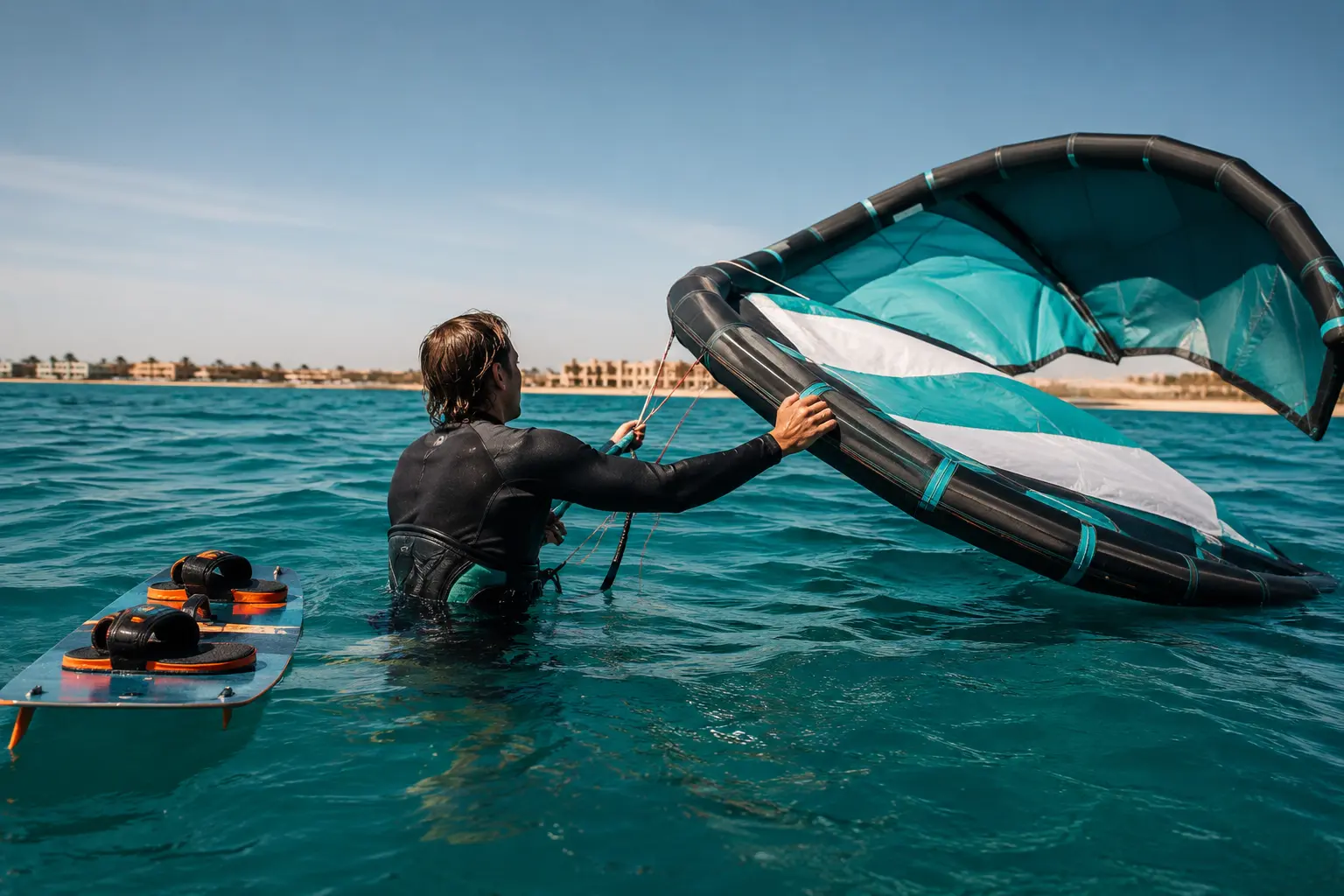
After the kite has been depowered, carefully move toward it while managing the lines to avoid tangles.
Wrap the lines in an organized manner as you approach the kite, keeping them under control at all times. Once you reach the leading edge, position yourself securely and hold the kite in a way that allows it to provide flotation and stability.
Taking your time during this step is important. Rushing can create line tangles that make the rescue more difficult and increase unnecessary risks.
Step 3: Use The Kite As A Sail
Once the kite is secured, use it as a sail to help you move toward shore whenever conditions allow.
Position the leading edge so the wind can catch the canopy and gently pull you in the right direction. Small adjustments to the kite’s angle can help you control your movement without using unnecessary energy. If there is very little wind, the kite will continue to provide flotation while you slowly make your way back by swimming. Throughout this step, remain aware of nearby riders, boats, and obstacles to avoid creating additional hazards.
Step 4: Return To Shore Safely
Stay patient and focus on reaching the nearest safe landing area rather than returning to your original launch spot.
Depending on the wind direction and current, you may come ashore some distance from where you started. This is completely normal during a self-rescue. Avoid rushing the process or making sudden movements that could reduce your control of the kite. Once you are in shallow water, carefully secure your equipment before leaving the water.
Remember, the goal of a self-rescue is not to save time; it is to return safely.
Common Self-Rescue Mistakes To Avoid
Even when riders understand the basic procedure, small mistakes can make a self-rescue more difficult. Avoiding these common errors helps keep the situation under control.
| Mistake | Why It’s Risky | Better Approach |
|---|---|---|
| Panicking | Leads to poor decisions | Stay calm and assess the situation first |
| Wrapping lines too quickly | Creates dangerous tangles | Wind the lines slowly and neatly |
| Letting go of the kite too early | Lose your main flotation device | Keep the kite secured until reaching shore |
| Trying to relaunch a damaged kite repeatedly | Wastes energy and may worsen the situation | Begin the self-rescue if the kite cannot be safely relaunched |
| Swimming against the wind or current | Causes unnecessary fatigue | Let the kite assist you whenever possible |
Most self-rescues become much easier when riders remain calm and follow a structured process instead of reacting impulsively.
Should Beginners Practice Self-Rescue?
Yes. Every beginner should practice self-rescue under the supervision of a qualified instructor before riding independently.
Learning the theory is helpful, but practicing the procedure in controlled conditions builds confidence and prepares you for real situations. During professional lessons, instructors demonstrate each step while ensuring riders understand how to manage their kite, equipment, and personal safety.
Practicing self-rescue before you ever need it helps transform an emergency procedure into a familiar skill.
Why Professional Lessons Include Self-Rescue
Safety is one of the most important parts of learning to kitesurf. Professional lessons do much more than teach water starts or riding techniques—they also prepare students for situations that cannot always be predicted.
At Kiteboarding Ways, self-rescue is introduced as an essential safety skill rather than an optional extra. Instructors teach riders how to recognize changing conditions, make smart decisions on the water, and perform a controlled self-rescue when necessary. Combined with the flat-water lagoons and reliable wind of the Red Sea, these lessons help students become safer, more confident, and more independent riders.
Self-Rescue Is About Preparation, Not Fear
Some beginners worry that learning self-rescue means kitesurfing is dangerous. In reality, it reflects the opposite.
Responsible riders prepare for situations that are unlikely but possible. Just as sailors learn emergency procedures before setting sail, kitesurfers learn self-rescue so they can respond calmly if conditions change. Understanding what to do removes uncertainty and allows you to enjoy every session with greater confidence.
Knowing you have the skills to handle unexpected situations is part of becoming a complete and responsible kitesurfer.
Final Thoughts
Self-rescue is one of the most valuable safety skills every kitesurfer can learn. While most sessions end without needing it, understanding the correct procedure ensures you are prepared if the unexpected happens.
By recognizing when to perform a self-rescue, following the proper steps, and practicing the technique with professional guidance, you can protect yourself, your equipment, and other water users. Combined with good judgment and regular training, self-rescue becomes more than an emergency procedure; it becomes an important part of safe and confident kitesurfing.
Frequently Asked Questions
Is Self-Rescue Difficult To Learn?
Not usually. Most riders learn the basic self-rescue procedure during professional lessons and become more confident after practicing it in controlled conditions.
When Should I Use a Self-Rescue?
You should perform a self-rescue whenever you cannot safely ride back to shore because of equipment failure, dropping wind, fatigue, or changing conditions.
Do All Kitesurfing Schools Teach Self Rescue?
Reputable kitesurfing schools include self-rescue as part of their safety training because it is considered an essential skill for independent riders.
Can Beginners Perform a Self-Rescue?
Yes. Beginners can learn and practice self-rescue under instructor supervision, helping them build confidence and prepare for unexpected situations on the water.
Is Self-Rescue Only For Emergencies?
Primarily, yes. Self-rescue is designed for situations where continuing to ride safely is no longer possible, allowing you to return to shore in a controlled and safe manner.