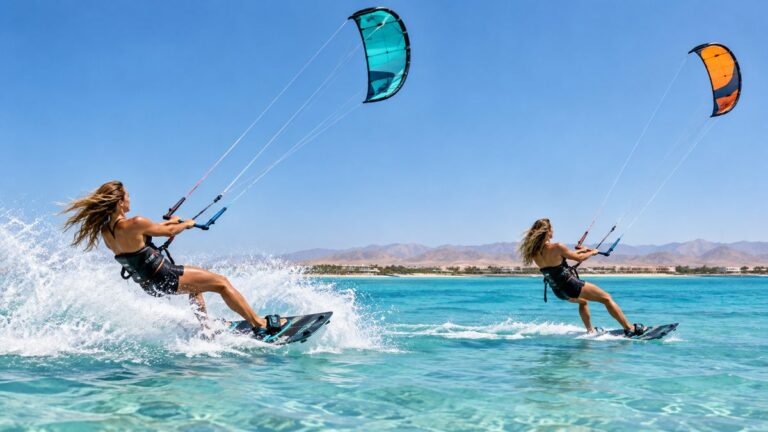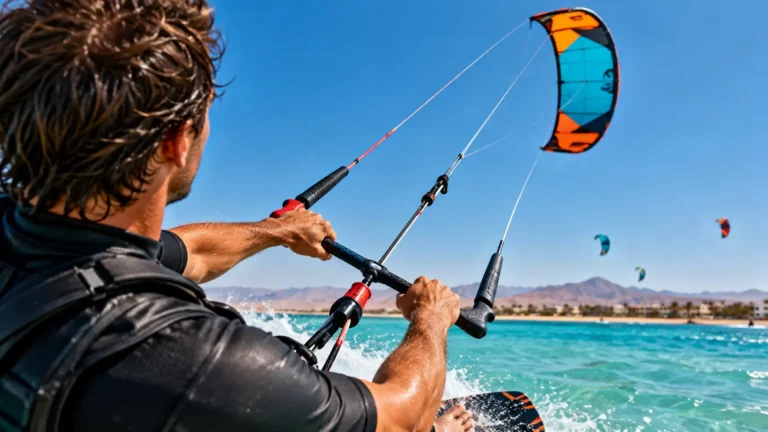
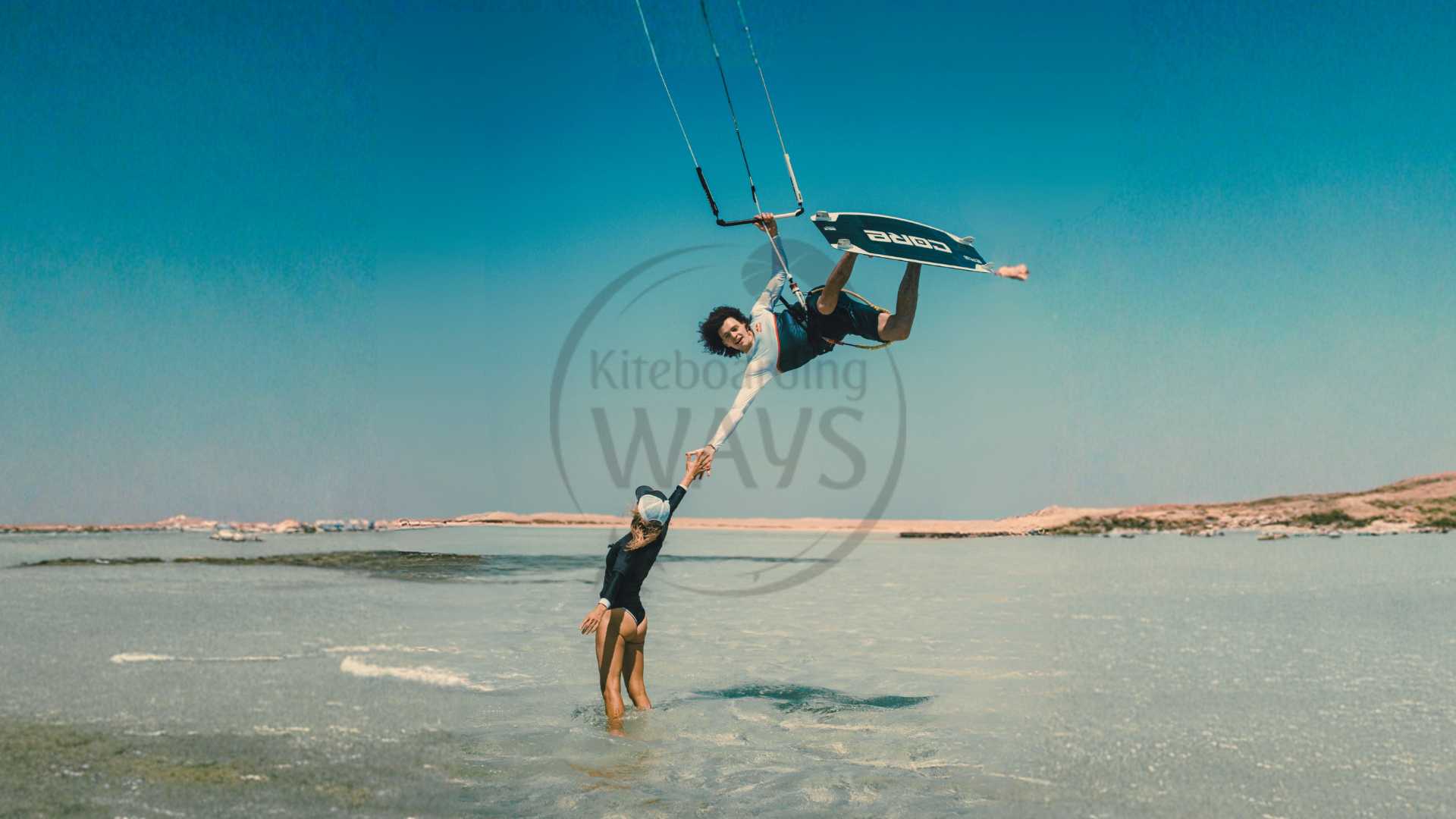
You’ve nailed your upwind, transitions, and jumps.. now it’s time to push beyond the basics and go for advanced kitesurfing tricks: rotations, board-offs, kite loops, unhooked moves, and big air.
In this guide, we’ll break down the essential advanced kitesurfing tricks and how to learn them safely, step by step. All techniques and progressions are drawn from professional coaching sessions at Kiteboarding Ways in El Gouna, Egypt, one of the top training destinations for riders aiming to level up their skills.
Why Learn Advanced Kitesurfing Tricks?
Progression is what keeps riders hooked. Advanced tricks:
- Improve control and kite awareness.
- Boost your confidence and style.
- Open opportunities for competitions or kite safaris.
- Make every session exciting — no matter the conditions.
But advanced riding isn’t about being fearless — it’s about being in control. With proper technique, you’ll unlock new tricks safely and consistently.
Advanced Kitesurfing Tricks 1 – Perfect Your Foundation
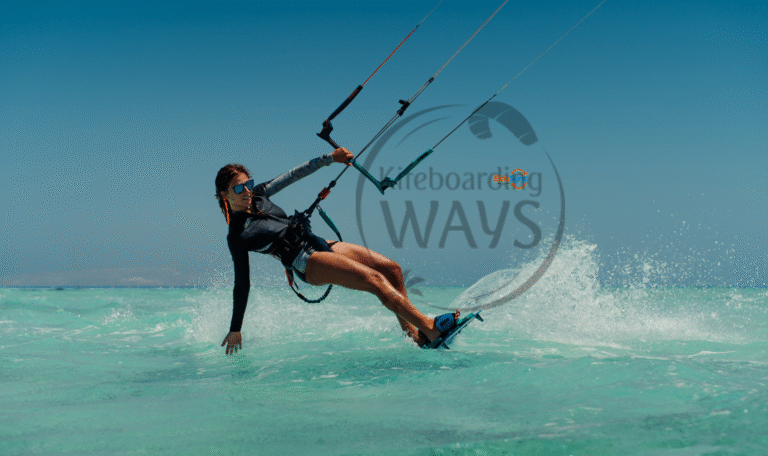
Before attempting any advanced kitesurfing tricks, refine your fundamentals:
- Smooth, controlled edging.
- Consistent pop (loading your board correctly before lift-off).
- Controlled landings and soft downwind releases.
- Maintaining speed through transitions.
📍 At Kiteboarding Ways, coaches analyze your riding and fix small technique gaps before you start training on rotations or loops — saving you months of trial and error.
Advanced Kitesurfing Tricks 2 – Start with Controlled Jumps
Jumping is the gateway to advanced kitesurfing. If you can jump consistently with smooth takeoff and landing, you’re ready to progress.
How to Improve Your Jump:
- Build moderate speed.
- Edge hard upwind and pull the bar slightly to generate lift.
- Look forward (not at the kite).
- Control your descent with gentle bar pressure.
💡 Pro Tip: Video analysis at Kiteboarding Ways helps you correct bar timing — one of the key challenges before moving to rotations or kite loops.
Advanced Kitesurfing Tricks 3 – Add a Front Roll
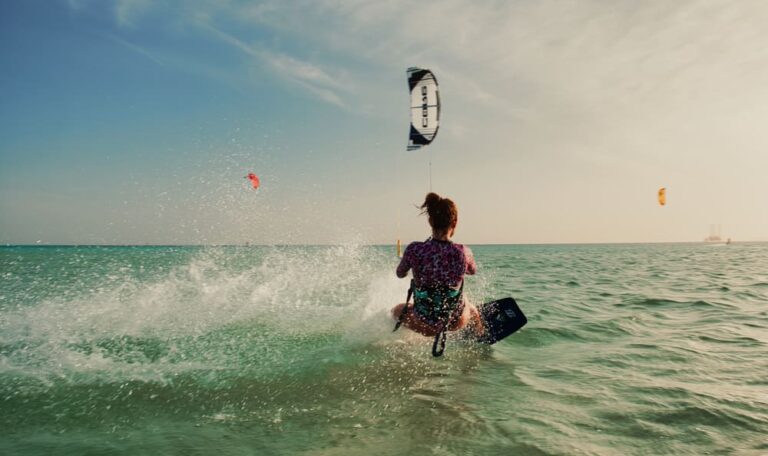
The front roll is often the first trick in every rider’s advanced kitesurfing tricks list.
Step-by-Step Front Roll:
- Start with medium speed and solid edging.
- As you pop, turn your head over your front shoulder.
- Keep the kite at 45° for stability.
- Spot your landing early and absorb with knees.
🎯 Common Mistake: Throwing your head too fast or losing bar tension. Keep it smooth and compact.
At Kiteboarding Ways, instructors break rotations into safe progressions — teaching the feeling of rotation first, then combining it with lift.
Advanced Kitesurfing Tricks 4 – Back Roll (Your Style Signature)
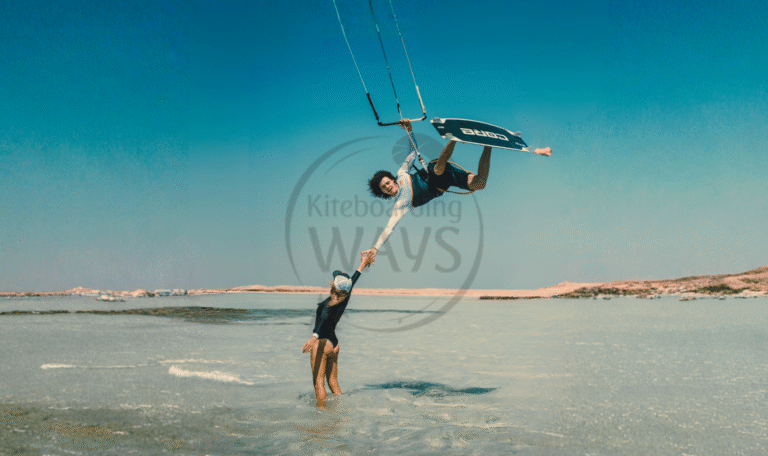
The back roll is pure style — and mastering it separates intermediates from advanced riders.
Technique:
- Edge hard and pop from your back foot.
- Look over your back shoulder to initiate rotation.
- Keep bar tension light but steady.
- Redirect the kite forward before landing.
Once you’re consistent, you can start variations — one-hand back roll, tail grab, or back roll transition.
Advanced Kitesurfing Tricks 5 – Unhooked Tricks (Advanced Level)
Unhooked riding opens a new world of advanced kitesurfing tricks: raleys, s-bends, handle passes, and more.
Before You Unhook:
- Ensure your kite is low (around 45°).
- Keep steady speed and power.
- Push hips forward to load the bar.
Progression Path:
- Raley → 2. S-Bend → 3. Blind Judge → 4. Back-to-Blind
These tricks require strong technique and flat water — which is why Kiteboarding Ways offers advanced coaching in El Gouna’s smooth lagoons before moving to kite safaris or offshore setups.
Advanced Kitesurfing Tricks 6 – Kite Loops and Megaloops
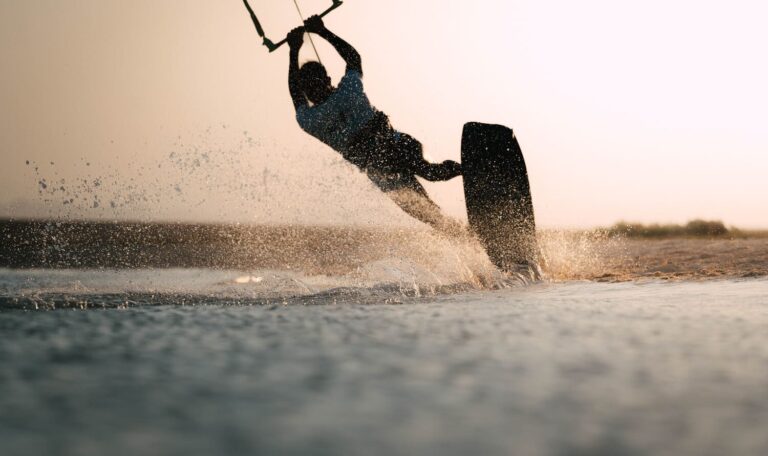
Few maneuvers define advanced kitesurfing like kite loops. They combine power, control, and perfect timing.
How to Start Safely:
- Begin with small downloops to learn the kite’s reaction.
- Progress to heli-loops (looping the kite during descent).
- Only attempt megaloops in steady 25–30 knots with professional supervision.
🪁 Safety First: Always wear an impact vest and practice under an experienced instructor. At Kiteboarding Ways, loops are taught progressively with real-time coaching via radio helmets.
Advanced Kitesurfing Tricks 7 – Board-Offs & Grabs
These tricks add serious style to your riding.
How to Master Board-Offs:
- Start with controlled jumps.
- Bring the board to your hands.
- Keep one hand on the bar at all times.
- Reattach your feet smoothly before landing.
Grabs (tail, nose, indy) enhance both your stability and confidence mid-air — and look incredible in photos.
📸 Riders training with Kiteboarding Ways often film board-off sessions during kite safaris — capturing their best Red Sea airtime moments.
Advanced Kitesurfing Tricks 8 – Combine Tricks into Flow

The mark of a true advanced rider is flow — linking tricks together naturally.
Combine rotations with grabs, add transitions between loops, and ride switch between attempts.
Practice consistency over quantity: 5 clean, controlled tricks > 15 messy ones.
💪 Pro Coaching Tip: During Kiteboarding Ways advanced clinics, every trick sequence is analyzed — refining bar input, kite position, and board control for smoother transitions.
Common Mistakes in Advanced Kitesurfing
Even experienced riders hit plateaus. Watch for these:
- Overpowering the kite instead of controlling speed.
- Looking at the kite mid-trick (lose orientation).
- Forgetting to spot your landing.
- Attempting new moves in gusty or unsafe conditions.
👉 Always progress in controlled environments like El Gouna’s lagoons, before testing your limits on kite safaris across the Red Sea.
Conclusion – Keep Pushing Your Limits
Progression is the soul of kitesurfing. Each session, each crash, and every small success builds toward mastery. Whether you’re landing your first rotation or chasing megaloops, training in the right place makes all the difference.
With its reliable wind, flat lagoons, and expert coaches, Kiteboarding Ways in El Gouna is the perfect destination to refine your advanced kitesurfing tricks, or take them to the next level on a Red Sea kite safari.
👉 Ready to elevate your riding?
Join an advanced coaching session or kite safari with Kiteboarding Ways and turn ambition into style.
FAQs – Advanced Kitesurfing Tricks
Q1: What are the best advanced kitesurfing tricks to start with?
Front rolls, back rolls, and board grabs are ideal first steps before moving into unhooked tricks or kite loops.
Q2: How can I safely learn advanced kitesurfing tricks?
Take coaching with certified instructors and steady winds. Kiteboarding Ways offers advanced programs and radio coaching for precise feedback.
Q3: How long does it take to progress to advanced kitesurfing?
With consistent riding and lessons, most riders reach advanced level within 6–12 months.
Q4: Can I learn advanced tricks during a kite safari?
Yes — Kiteboarding Ways Safaris include progression-focused coaching, giving riders flat, uncrowded water and steady wind for big air or unhooked practice.