What to Expect in Your First Kitesurfing Lesson?
Your complete beginner’s kitesurfing lesson walkthrough — from setup to your first water start
If you’re reading this, you’re probably picturing yourself kitesurfing across turquoise water with a kite pulling you toward the horizon. But first — you’ve got to start somewhere.
Your first Kitesurfing lesson is the gateway to an unforgettable sport.
In El Gouna, Egypt, where shallow lagoons and steady wind make learning easier, your Day 1 experience can set the tone for how fast you progress.
This guide walks you through everything that happens during a kitesurfing beginner lesson — from safety briefings and wind theory, to body-dragging, gear control, and your first attempts at water starts.
💡 Want to fast-track your progress? Book your certified kite lesson here
🧭 The 1st Thing To Learn in Kitesurfing Lesson:
Safety & Wind Awareness
Before you touch a kite, you’ll learn how it works — and how to stay safe.
✅ The Theory You’ll Cover:
- Wind window: The invisible dome where your kite flies
- Power zones: Where the kite pulls strongest (and where to avoid as a beginner)
- Kite setup & safety system: Quick-release, leash, chicken loop
- Spot assessment: Reading wind direction, other riders, and obstacles
- Self-rescue steps: What to do if things go wrong
This is not a boring theory — it’s what gives you confidence once you’re in the water.
🪁 Kite Control on the Beach: Your Hands-On Start
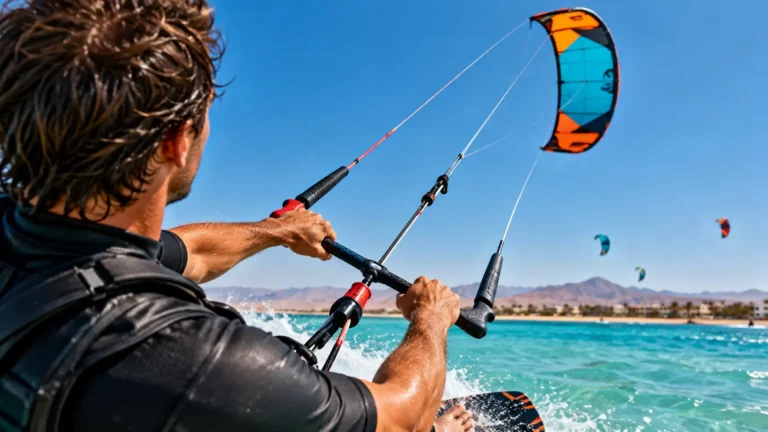
You’ll begin on the sand, flying a trainer kite or inflatable LEI kite depending on conditions.
What You’ll Practice:
- Steering with one hand
- Parking the kite in neutral zones (12 o’clock, 10/2 positions)
- Quick-release and re-arming the safety
- Managing gusts and pulling power safely
👉 By the end of this phase, you’ll feel the kite’s power — and understand how to control it without fighting it.
🌊 Body Dragging: Learning to Work With the Wind
After beach control, you move into body dragging — one of the most valuable exercises for every kiteboarder.
You’ll enter waist-deep water and let the kite pull you without a board.
Why Body Dragging Matters in Kitesurfing Lesson?
- Teaches water balance and control
- Helps you feel kite pull direction
- Prepares you for board recovery later
- Builds core wind awareness & timing
Most students do downwind and crosswind drags, learning to adjust kite position for controlled movement.
🛟 Bonus: You’ll also practice self-rescue simulation — a must-have skill for independent riding.
🏄♂️ Water Start Prep: Meeting the Board
Once you’re steady in the water and understand how to manage power, you’ll be introduced to the board.
Here’s what happens next:
You’ll Learn:
- How to position the board while floating?
- How to dive the kite to pull you up?
- How to keep your knees bent and weight back?
- Timing — the hardest and most important part
Don’t worry if you don’t ride right away — most students need a few tries to get it right.
But your instructor will guide you through every attempt with instant radio feedback.
📈 What Progress Looks Like (Realistic Expectations)
| Time | What You’ll Likely Achieve |
| 1 Hour | Basic kite flying on beach |
| 2–3 Hours | Safe launching, re-launching, body dragging |
| 4–5 Hours | Board intro + first water start attempts |
| 6–8 Hours | Riding short distances with assistance |
| 10+ Hours | Independent gliding and transitions |
Every rider learns at their own pace. Some are standing on the board within 4 hours — others need 2 days. Both are normal.
✅ Tip: To progress faster, consider private lessons with IKO-certified coaches
🎯 What to Expect from Your Kitesurfing Lesson Instructor?
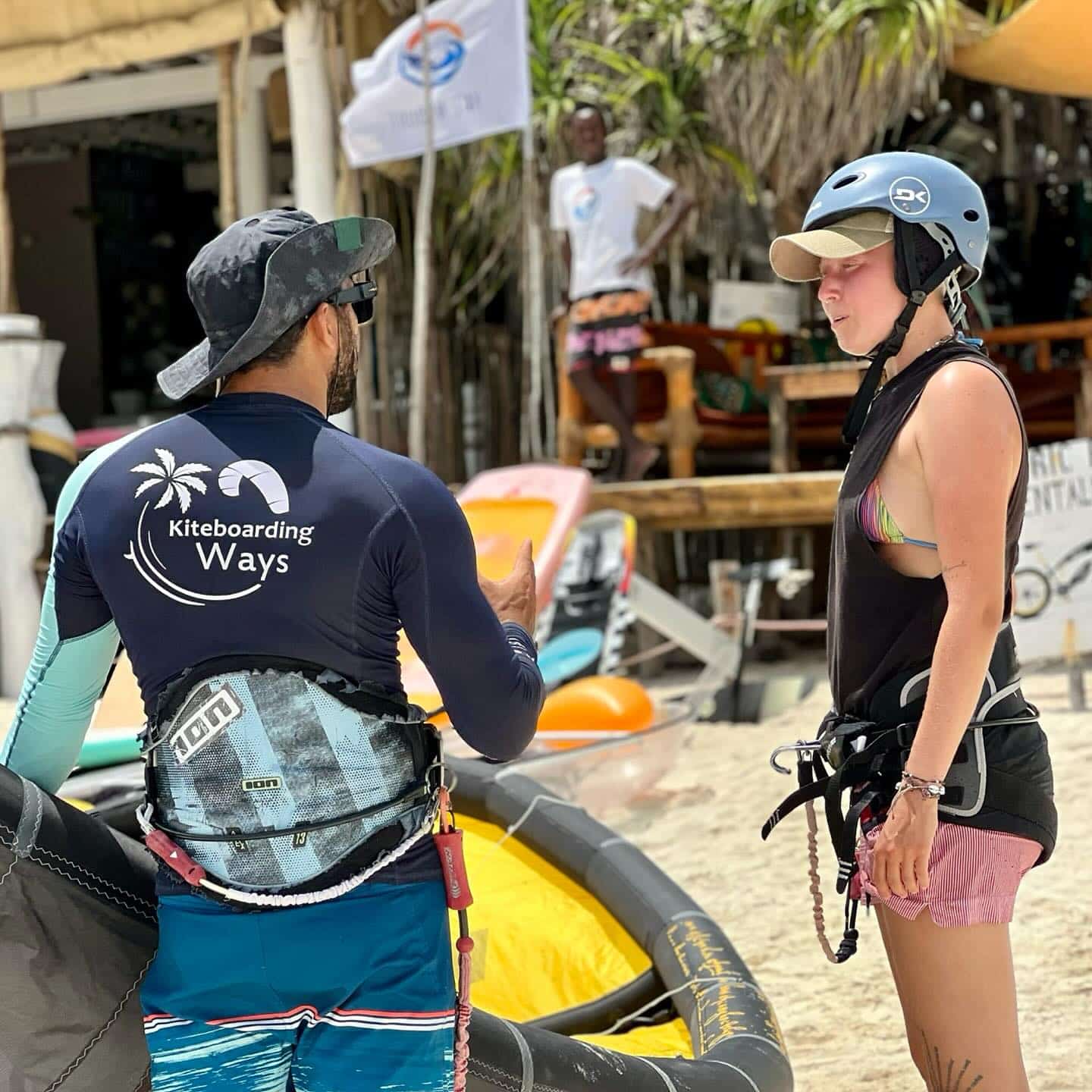
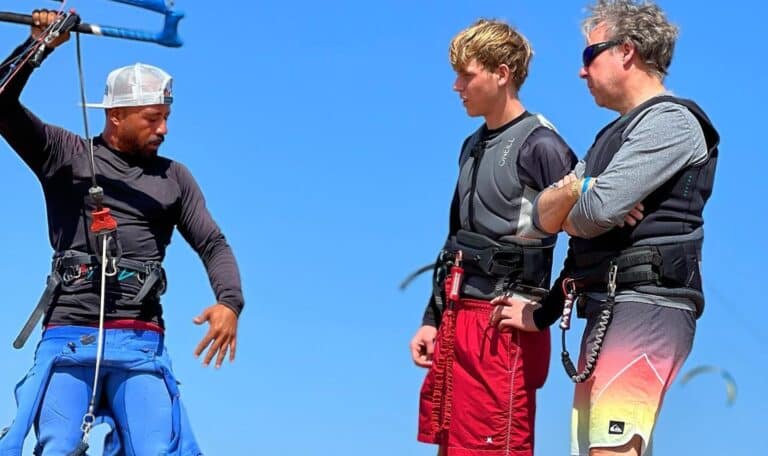
A good instructor in Kiteboarding Ways won’t just “watch you ride” — they’ll be hands-on and supportive.
They’ll help you:
- Adjust your harness & stance
- Tune the kite’s power setting
- Understand wind shifts & gusts
- Stay calm in every attempt
Look for instructors who are IKO certified, communicate clearly, and break complex steps into bite-sized progressions.
That’s exactly what we offer at Kiteboarding Ways.
🧠 Mental Tips for First-Timers:
- Let the kite do the work — Don’t muscle it
- Be patient — Progress happens in waves, not in a straight line
- Celebrate small wins — Good launch, better body drag, smoother crash
- Ask questions — Your instructor is your guide
Have fun — Everyone started where you are
🎒 What to Bring to Your Kitesurfing Lesson?
We supply the gear, but bring:
- Sunglasses + strap
- Sunscreen (reef-safe)
- Rash guard or quick-dry top
- Swim shorts
- Water bottle + light snacks
Optional: GoPro with mount (if you want a keepsake)
✅ Conclusion: Your First Kitesurfing Lesson Sets You Up for the Ride Ahead
Your first kitesurfing lesson isn’t just about skills — it’s about confidence.
It’s the moment you realize the sport is within reach, and your dream of riding the wind is closer than ever.
If you’re in Egypt or El Gouna (or planning to visit), give yourself the best start possible with structured, safe, and certified lessons.