If you are planning a kiteboarding trip from Germany, the UK, France, Switzerland, or anywhere in Europe, timing is one of the most important decisions you will make. Wind consistency, temperature, water conditions, and crowd levels can completely change your experience.
Egypt’s Red Sea is famous for its long wind season, warm water, and short flight distance from Europe. However, not every month offers the same riding experience, especially if you are planning a one-week kite safari trip.
Some months deliver stronger thermal winds, while others offer quieter lagoons and cooler temperatures. Choosing the right travel window can mean the difference between a good trip and an unforgettable week of daily kite sessions.
This guide explains the best time for a kite safari in Egypt, month by month, so you can plan your Red Sea trip with confidence.
Why Timing Is Important for a Kite Safari
For riders flying in from Europe or the USA, every windy day counts. Most guests book 5–7 day trips, expecting reliable riding conditions during their stay.
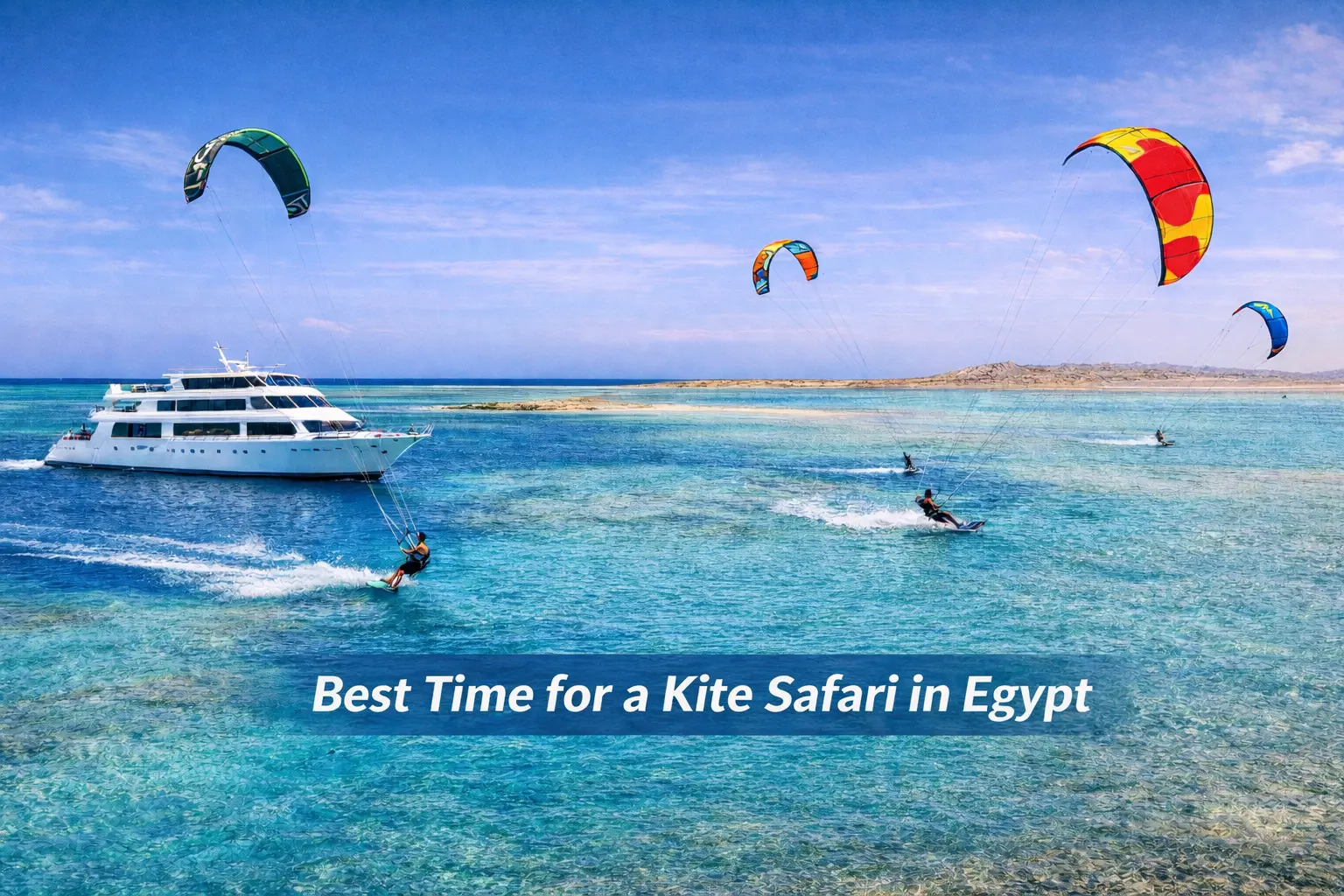
Unlike a beach-based trip, a kite safari moves between remote islands and shallow lagoons across the Red Sea. Because of this mobility, wind planning becomes even more important.
During a safari week, you ideally want:
- Reliable daily wind
- Minimal downtime
- Safe sea conditions
- Maximum riding hours
Choosing the right month significantly increases the probability of strong daily sessions.
Best Performance Months: April – June & September – October
For most international riders, these months are widely considered the best time for a kite safari in Egypt.
During these periods, the Red Sea typically offers:
- Consistent thermal winds
- Average wind speeds around 18–25 knots
- Warm water suitable for long sessions
- Stable weather systems
- Long daylight hours
These months provide the best balance between wind reliability, comfort, and riding progression.
For this reason, many experienced riders plan their trips specifically for April, June, September, or October.
At Kiteboarding Ways, many of our safari programs are scheduled around these high-performance windows to maximize the riding success rate for international guests.
Shoulder Season: March & November
These months offer a slightly different but still enjoyable kiteboarding experience.
Typical conditions include:
- Moderate wind frequency
- Comfortable air temperatures
- Fewer boats on the water
- Relaxed lagoon conditions
For European riders escaping colder spring or autumn weather, this period can still deliver excellent riding potential while avoiding peak summer heat.
Summer Travel Months: July & August
July and August fall within Egypt’s main summer tourism period. While visitors continue to travel during this time, conditions can be different compared to the main kite safari season.
These months often include:
- Very hot air temperatures
- Strong midday sun
- More variable wind patterns
Travelers already visiting Egypt during the summer may still enjoy kitesurfing sessions. However, riders planning short performance-focused safari trips often prefer the more consistent wind periods earlier or later in the season.
Hydration, sun protection, and careful planning become especially important during midsummer travel.
Winter Season: December to February
Winter months are still rideable in Egypt, but wind conditions can be less predictable.
You may experience:
- Variable wind strength
- Occasional lighter wind days
- Cooler air and water temperatures
For digital nomads or travelers spending extended time in Egypt, winter sessions can still be enjoyable. However, for short 5–7-day safari trips, the main season generally offers a higher likelihood of daily riding.
Understanding the Red Sea Wind System
The Red Sea benefits from stable thermal wind systems created by desert temperature differences.
During strong wind periods:
- Wind typically builds late morning
- All day wind
- Gradually softens near sunset
This predictable pattern makes kite safaris extremely efficient. Boats anchor near protected lagoons, where riders can maximize their time in the water throughout the day.
If you are still developing your riding skills, structured coaching, such as Kitesurfing Lessons, can help you build confidence before joining a safari experience.
Water and Temperature Conditions
| Season | Water Temp | Air Temp |
| Summer | 24–28°C | 30–38°C |
| Spring | 22–24°C | 22–30°C |
| Winter | 20–22°C | 15–25°C |
During peak summer, many riders kite comfortably without a wetsuit, while winter sessions usually require a light wetsuit.
Month-By-Month Kite Safari Overview
| Period | Key Highlights | Experience |
|---|---|---|
| March – April | Balanced wind & pleasant temperatures | A quieter start to the season with relaxed lagoons |
| May – June | Reliable wind & warm water | One of the most popular windows for a One Week Kite Safari |
| July – August | Summer travel season | Hot temperatures with mixed wind conditions |
| September – October | Excellent wind consistency | Often considered the golden season for kite safaris |
| November | Transitional winds | Flexible riders can still enjoy quality sessions |
| December – February | Cooler temperatures | Suitable for adaptable riders |
Why a Kite Safari Often Has Better Wind Odds Than a Fixed Spot
One major advantage of a safari is mobility. Instead of staying at one location, the boat can reposition depending on wind conditions. This allows riders to access multiple lagoons and remote islands.
Programs such as the One Day Kite Safari or longer multi-day routes allow riders to explore different kite spots throughout the week.
This flexibility significantly increases the chances of scoring quality sessions even when conditions change.
Common Mistakes When Choosing the “Best Time”
Many travelers choose dates based only on air temperature. However, experienced riders know that the best planning considers several factors.
Common mistakes include:
- Choosing travel dates only based on temperature
- Ignoring water temperature
- Assuming Egypt is always windy
- Booking peak weeks expecting empty lagoons
- Bringing the wrong wetsuit
Preparation and realistic expectations are key to a successful trip.
Rider Tips to Maximize Your Safari Week
Experienced riders often prepare carefully for their trip.
Helpful tips include:
- Bring a versatile kite range (7m–12m)
- Stay hydrated during warm months
- Structure sessions to balance progression and recovery
- Foil riders may enjoy shoulder season conditions
A well-planned trip helps ensure you get the most value out of every riding day.
Why do many international riders choose kiteboarding
At Kiteboarding Ways, our Red Sea kite safari programs are designed specifically for international riders looking for reliable wind and organized safari experiences.
Our trips combine:
- Experienced local captains
- Carefully selected lagoon locations
- Comfortable liveaboard accommodation
- Small rider groups for better access to kite spots
From airport coordination in Hurghada to daily route planning based on wind forecasts, every detail is designed to keep your trip focused on riding.
For riders traveling from Europe or abroad, this structured approach creates a smooth and well-organized kite safari experience.
Booking Advice for International Travelers
Flights to Hurghada International Airport are relatively short from most European cities, usually around 4–5 hours.
Because safari boats operate with limited cabins, the most popular travel windows often fill quickly.
Many riders plan their trips several months in advance, especially for departures in May, June, September, and October.
When Should You Book Your Kite Safari?
Peak safari weeks usually fill early. If you are targeting May, June, or September, reserving your cabin a few months in advance is highly recommended. Early booking gives you better options and helps coordinate group travel more smoothly.
If you would like assistance planning your trip or checking availability, you can contact the Kiteboarding Ways team directly for guidance.
Frequently Asked Questions
What is the best time for a kite safari in Egypt?
May to October generally offers the most reliable wind conditions. Many riders consider May–June and September–October the most balanced months for performance and comfort.
Is September a good time for kiteboarding in Egypt?
Yes. September often provides excellent wind consistency while offering slightly cooler temperatures compared to midsummer.
Is winter a good time for a kite safari?
Winter can still offer rideable conditions, but wind consistency may vary more compared to peak season months.
Do I need a wetsuit in Egypt?
Yes, especially outside peak summer months when water temperatures are cooler.
How far in advance should I book a kite safari?
Peak season weeks usually sell out quickly. Booking several months in advance is recommended.