Every experienced kitesurfer remembers making beginner mistakes. Falling during water starts, losing the board, stalling the kite, or riding downwind are all part of the learning process. The difference between riders who progress quickly and those who struggle for months often comes down to identifying these mistakes early and correcting them before they become habits.
The good news is that most beginner mistakes are completely preventable. With the right technique, suitable conditions, and proper coaching, riders can avoid many of the frustrations that slow progression.
This guide explains the most common kitesurfing mistakes, why they happen, and what you can do differently to become a safer, more confident rider.
Why Beginners Make The Same Mistakes
Kitesurfing combines wind awareness, kite control, board skills, and body coordination all at the same time. When learning something so technical, it is completely normal to focus on one task while accidentally neglecting another.
Many beginners also try to progress too quickly or practice in conditions that are beyond their current ability. Recognizing these challenges is the first step toward improving faster.
Mistake #1: Choosing The Wrong Wind Conditions
One of the biggest mistakes beginners make is learning in unsuitable weather.
Many assume that stronger winds will make riding easier because the kite generates more power. In reality, excessive wind often makes kite control much more difficult and increases the risk of crashes.
The best learning conditions usually include:
- Steady wind
- Flat water
- Plenty of open space
- No strong gusts
This is one reason many international visitors choose to learn in Egypt, where the Red Sea offers reliable wind and beginner-friendly lagoons throughout much of the season.
Mistake #2: Trying To Skip Professional Lessons
Some beginners believe they can learn entirely from YouTube videos or by copying friends.
While online videos are useful for understanding concepts, they cannot replace real-time coaching. An experienced instructor can identify mistakes immediately, explain how to correct them, and help build safe habits from the beginning.
For riders visiting Egypt, professional Kitesurfing Lessons in El Gouna provide structured guidance that often saves weeks or even months of trial and error.
Mistake #3: Looking Down Instead Of Looking Ahead
Many beginners constantly watch their board while riding. Although this feels natural, it usually causes poor balance, delayed reactions, and awkward body positioning.
Instead, keep your eyes focused toward the direction you want to travel. Looking ahead naturally improves posture, balance, and steering while making transitions feel smoother.
A simple change in where you look can have an immediate impact on your riding.
Mistake #4: Holding The Control Bar Too Tightly
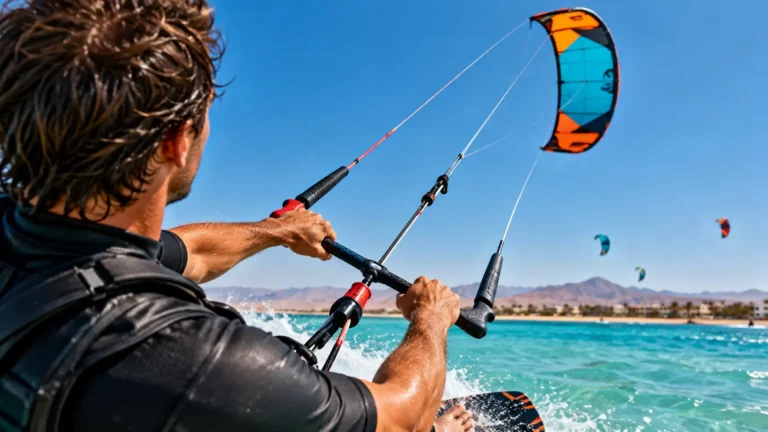
New riders often grip the control bar as tightly as possible because they feel nervous. Unfortunately, excessive tension reduces steering precision and causes unnecessary arm fatigue.
The control bar should be held firmly enough to maintain control but relaxed enough to allow smooth kite movements.
Experienced riders often make kite control look effortless because their movements are calm rather than forceful.
Mistake #5: Standing Up Too Early During Water Starts
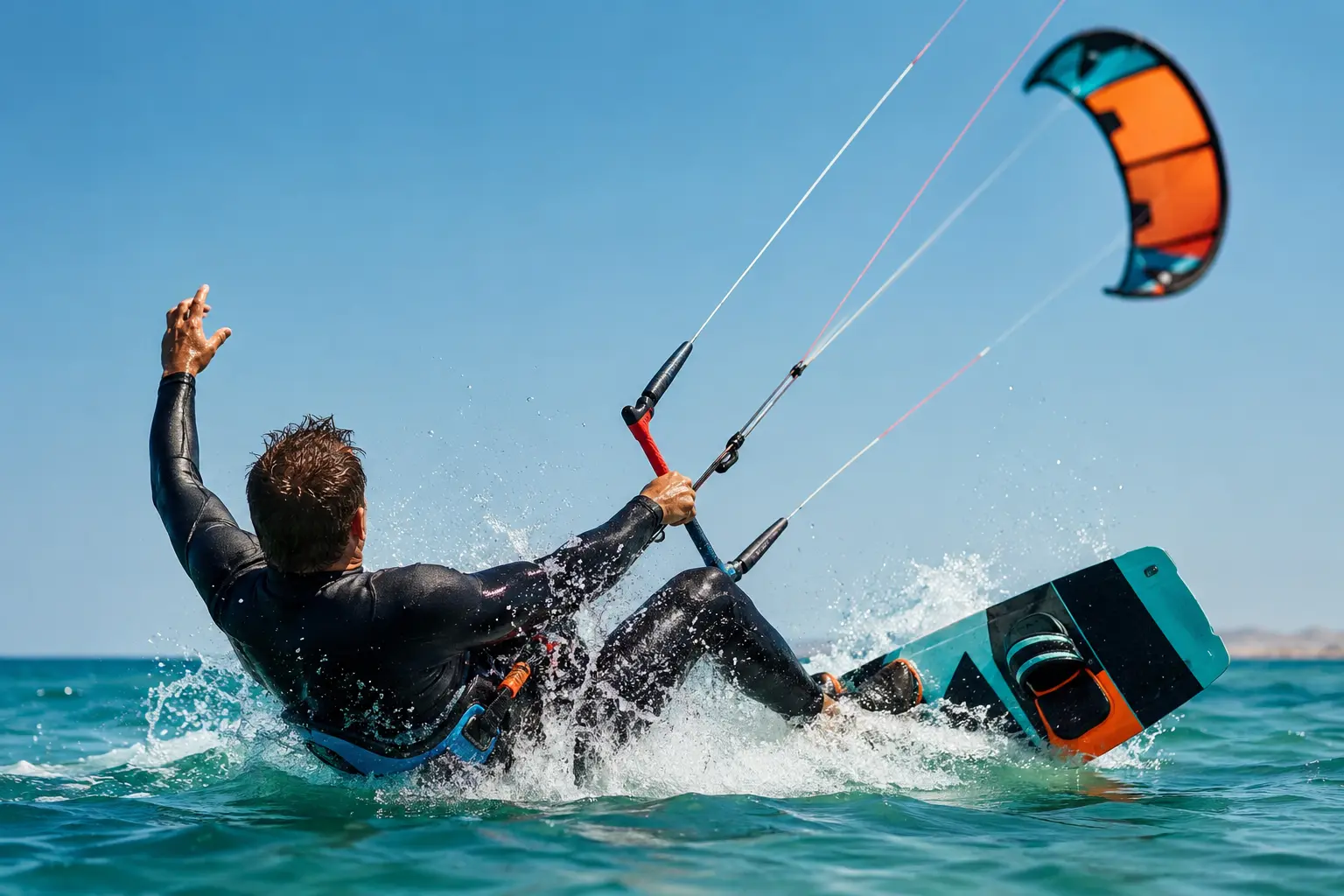
Many beginners try to stand as soon as the kite begins pulling. This usually causes the board to stop, resulting in a fall.
Instead of forcing yourself upright, allow the kite to generate steady power while your board starts moving across the water. Once you gain momentum, standing becomes much easier and more stable.
Patience during the first few seconds often makes the entire process more successful.
Mistake #6: Ignoring Wind Direction
Understanding wind direction is just as important as controlling the kite. Many beginners launch without checking whether the wind is onshore, offshore, or side-onshore. This can affect both safety and progression.
Before every session, take a moment to understand:
| What To Check | Why It Matters |
|---|---|
| Wind direction | Improves safety and launch planning |
| Wind strength | Helps select the correct kite size |
| Gusts | Prevents unpredictable power changes |
| Launch area | Reduces unnecessary risks |
Developing this habit early helps riders make smarter decisions every time they go on the water.
Mistake #7: Using The Wrong Kite Size
Choosing a kite that is too large or too small makes learning much harder. An oversized kite can generate excessive power, while an undersized kite may not provide enough pull to ride consistently.
Kite size should always be selected based on:
- Rider weight
- Wind speed
- Board size
- Current conditions
During lessons, instructors typically choose the appropriate equipment so beginners can focus on technique rather than equipment choices.
Mistake #8: Practicing Advanced Tricks Too Soon
Social media often makes advanced tricks look easy. Many beginners attempt jumps or transitions before mastering the fundamentals, which usually leads to frustration and unnecessary crashes.
Progression works best when each skill builds on the previous one.
A strong foundation in kite control, body position, water starts, and riding both directions makes advanced techniques much easier later.
Mistake #9: Forgetting To Check Equipment Before Riding
Even experienced riders inspect their equipment before every session. Beginners sometimes skip this routine, increasing the risk of preventable problems.
A quick pre-session inspection should include:
- Kite canopy
- Flying lines
- Safety release
- Harness connection
- Pump pressure
- Board straps
Spending a few minutes checking equipment can prevent an entire session from being interrupted.
Mistake #10: Expecting Progress To Happen Overnight
Perhaps the most common mistake is expecting immediate results. Kitesurfing is a technical sport that rewards consistency rather than speed. Every rider progresses differently, and comparing yourself to others often creates unnecessary pressure.
Instead of measuring success by tricks, focus on small improvements like:
- Longer rides
- Better kite control
- Smoother water starts
- More consistent upwind riding
- Increased confidence
These milestones build the foundation for everything that comes next.
Common Kitesurfing Mistakes And Their Solutions
Even the best riders made beginner mistakes at some point. The important thing is recognizing them early and replacing bad habits with proper technique. The table below summarizes the most common problems and the simplest ways to correct them.
| Common Mistake | Better Approach |
|---|---|
| Learning in strong or gusty wind | Practice in steady, moderate conditions |
| Skipping professional lessons | Learn with a certified instructor |
| Looking down at the board | Keep your eyes focused where you want to ride |
| Holding the control bar too tightly | Relax your grip and steer smoothly |
| Standing too early during water starts | Let the kite generate power before standing |
| Ignoring wind direction | Always check wind strength and direction before launching |
| Choosing the wrong kite size | Match your equipment to the conditions and your weight |
| Attempting advanced tricks too soon | Master the fundamentals before progressing |
| Skipping equipment checks | Inspect your kite, lines, harness, and safety systems before every session |
| Expecting instant progress | Focus on consistent improvement rather than quick results |
How To Build Good Habits From The Beginning
Correcting mistakes is important, but preventing them is even better. Every session should have a clear objective instead of trying to improve everything at once. For example, dedicate one session to smoother kite control, another to cleaner water starts, or another to staying upwind more consistently. By focusing on one skill at a time, beginners usually build stronger fundamentals and gain confidence more quickly.
Another helpful habit is asking for feedback after every session. Small adjustments suggested by an instructor can prevent incorrect techniques from becoming permanent habits.
Why Egypt Helps Beginners Avoid Many Common Mistakes
The learning environment has a major influence on how quickly you improve. Many beginner mistakes become more difficult to correct when riders are dealing with waves, inconsistent wind, or crowded beaches.
Egypt’s Red Sea offers conditions that naturally support faster learning, including:
- Flat, shallow lagoons
- Reliable thermal wind
- Warm water throughout much of the year
- Large open riding areas
- Plenty of space to practice safely
These conditions allow beginners to focus on technique instead of constantly reacting to difficult water or changing weather.
Learning The Right Way With Kiteboarding Ways
At Kiteboarding Ways, our coaching philosophy is based on preventing mistakes before they become habits. Rather than rushing riders through a lesson plan, instructors focus on building a strong foundation in kite control, body position, safety awareness, and board skills.
Lessons are adapted to each rider’s ability and the day’s conditions, allowing beginners to progress at a comfortable pace while developing the confidence needed for independent riding. By combining experienced coaching with the reliable conditions of the Red Sea, many students find they learn more efficiently and enjoy the process much more.
Mistakes Are Part Of Every Rider’s Journey
Making mistakes does not mean you are progressing slowly—it means you are learning. Every experienced kitesurfer has gone through the same challenges, from struggling with water starts to crashing during transitions.
The key difference is that successful riders treat every mistake as feedback rather than failure. Each session provides an opportunity to refine technique, improve decision-making, and become more comfortable on the water.
With patience, consistent practice, and the right learning environment, many of today’s beginner mistakes become tomorrow’s strengths.
Final Thoughts
Every kitesurfing journey begins with challenges, but those challenges do not have to slow your progress. By understanding the most common mistakes and correcting them early, you can build safer habits, improve your technique, and enjoy every session with greater confidence.
Whether your goal is to ride upwind consistently, perform smoother transitions, or simply feel more in control of the kite, success comes from practicing the fundamentals in the right conditions. With professional instruction, steady progression, and reliable Red Sea wind, you’ll spend less time repeating mistakes and more time enjoying everything that makes kitesurfing such a rewarding sport.
Frequently Asked Questions
What Is The Most Common Mistake In Kitesurfing?
The most common mistake is trying to progress too quickly before mastering the fundamentals. Building strong kite control and board skills first makes every advanced technique easier to learn.
Why Do Beginners Keep Falling During Water Starts?
Most beginners fall because they stand too early, move the kite too aggressively, or lose balance before the board gains enough speed. Focusing on smooth kite movement and patience usually improves water starts.
Can Professional Lessons Help Reduce Beginner Mistakes?
Yes. Professional instructors identify mistakes early, provide immediate feedback, and teach correct techniques from the beginning, helping riders progress faster and more safely.
Where Is The Best Place To Learn Kitesurfing?
Many beginners choose Egypt because the Red Sea offers flat-water lagoons, reliable wind, warm temperatures, and spacious learning areas that support steady progression.