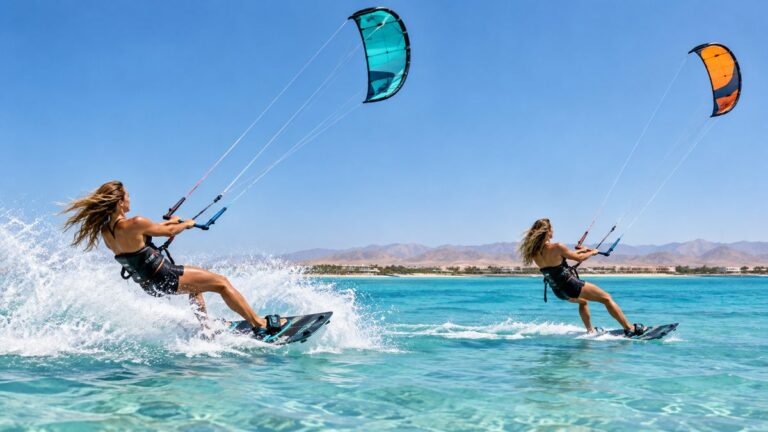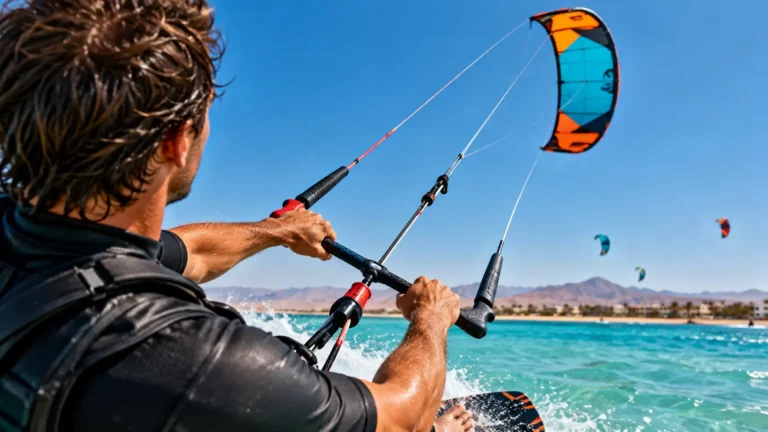
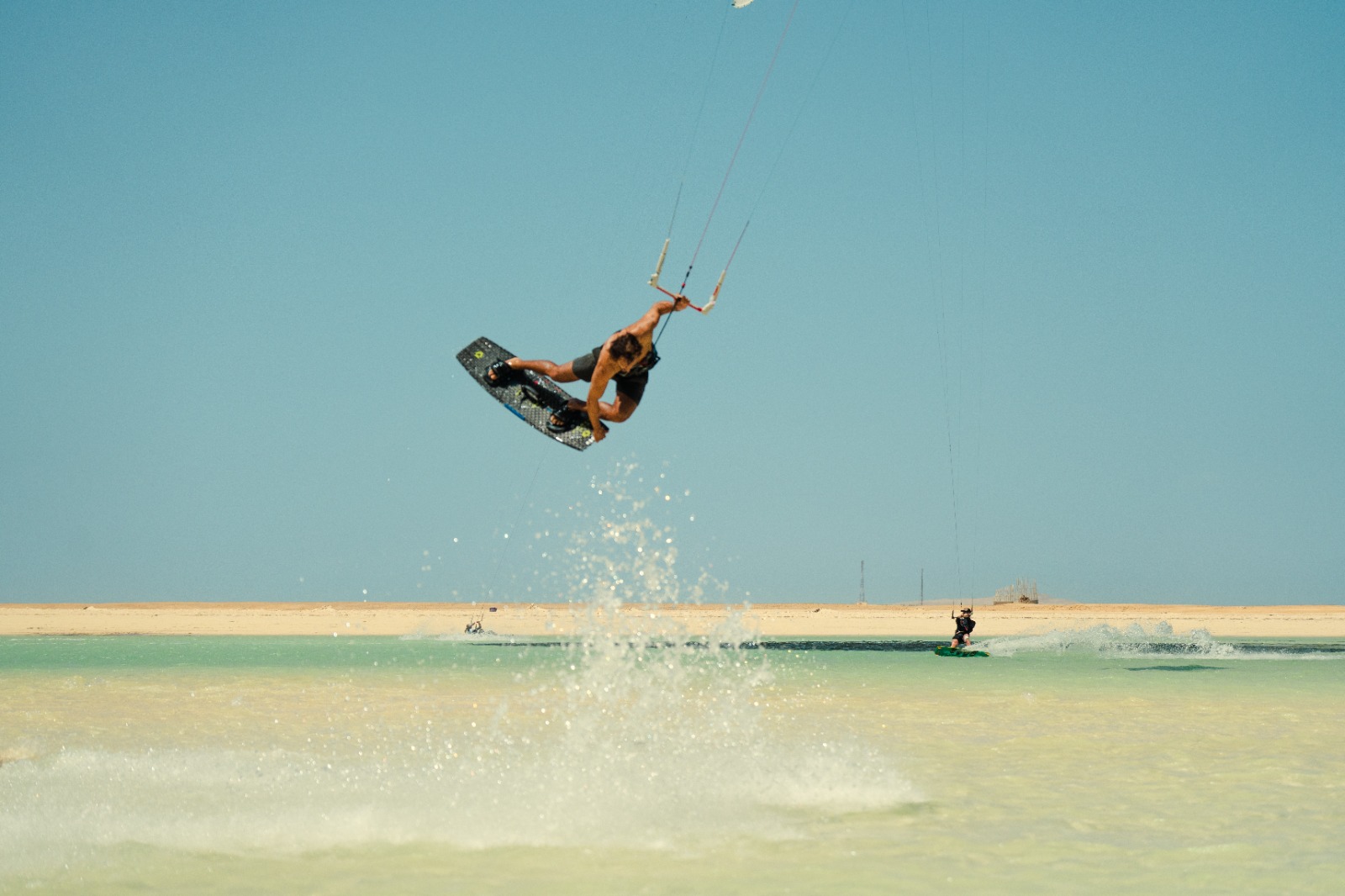
Wind is the most important factor in kitesurfing. Before choosing your destination, booking lessons, or even selecting your equipment, you need to understand one key thing: how many knots for kitesurfing are actually required?
For beginners, this can be confusing. Too little wind means you won’t be able to ride, while too much wind can quickly become difficult to control. Finding the right balance is what makes kitesurfing both safe and enjoyable.
For international riders traveling to destinations like Egypt’s Red Sea, understanding wind ranges in advance helps you plan your trip better and make the most of your time on the water.
How Many Knots Do You Need For Kitesurfing?
Most riders need 12 to 25 knots of wind for kitesurfing, depending on their skill level and kite size.
Here’s a simple breakdown:
- 10–12 knots → Minimum wind (light riding, larger kites required)
- 12–20 knots → Ideal for beginners
- 20–25 knots → Perfect for intermediate riders
- 25+ knots → Strong wind (advanced riders only)
For beginners, the safest and most comfortable range is 12 to 18 knots. The ideal wind range for kitesurfing is 12–25 knots. Beginners learn best in 12–18 knots, where the wind is strong enough to ride but still easy to control.
Why Wind Speed Matters In Kitesurfing
Kitesurfing relies completely on wind power. The strength of the wind determines:
- How easy it is to control the kite
- How much power do you generate
- How stable your ride feels
- How safe are the conditions
Too little wind limits your ability to ride, while too much wind increases difficulty and risk.
Best Wind Conditions For Beginners
For beginners, ideal conditions include:
- 12–18 knots of steady wind
- Smooth and consistent airflow
- Shallow water for easier recovery
These conditions allow you to focus on control and technique without feeling overpowered.
At Kiteboarding Ways, lessons are scheduled based on safe wind ranges to ensure beginners learn in controlled and comfortable conditions.
Wind Conditions In Egypt’s Red Sea
Egypt’s Red Sea is one of the most reliable kitesurfing destinations for international riders.
Typical conditions include:
- Consistent thermal winds
- Average wind speeds of 15–25 knots
- Minimal gusts compared to many European locations
This consistency allows riders to maximize their time on the water, especially during short trips.
At Kiteboarding Ways, sessions are planned around these wind patterns to ensure both safety and progression.
How Kite Size Affects Wind Requirements
Wind speed alone is not enough — kite size also plays a key role.
General guideline:
- Light wind → larger kite (12m–15m)
- Medium wind → standard kite (9m–12m)
- Strong wind → smaller kite (6m–9m)
This balance helps riders adjust power depending on conditions.
Beginners usually don’t need to worry about this, as instructors select the correct kite size during lessons.
Safe Wind Limits For Beginners
Safety is critical when learning kitesurfing.
Recommended limits:
- Minimum: 12 knots
- Ideal: 12–18 knots
- Maximum: around 20 knots
Wind above this range can feel too strong for beginners and is generally avoided during lessons. At Kiteboarding Ways, instructors monitor wind conditions daily and adjust sessions accordingly.
What Happens If Wind Is Too Strong Or Too Light?
Understanding both extremes helps avoid common mistakes.
Too Little Wind (Below 10 Knots)
- Not enough power to ride
- Limited learning progress
- Difficult kite control
Too Much Wind (25+ Knots)
- Harder to control the kite
- Increased risk for beginners
- Requires a smaller kite and experience
Choosing the right wind range is essential for a safe and enjoyable session.
Why do many international riders choose kiteboarding
Many riders traveling from Europe choose Kiteboarding Ways because of the reliable wind conditions and structured lesson approach.
Our programs focus on:
- Safe wind conditions for each level
- Shallow lagoon learning environments
- Certified instructors
- Real-time wind-based planning
For international visitors with limited time, this ensures maximum progress during their trip.
After lessons, riders can continue improving through a kite camp in El Gouna or experience stronger wind sessions during a Red Sea kite safari.
Tips For Choosing The Right Wind Conditions
If you’re planning your trip, follow these tips:
- Check seasonal wind patterns before booking
- Avoid extremely strong winds as a beginner
- Choose destinations with consistent thermal wind
- Trust your instructor’s recommendations
Good wind conditions significantly improve your learning experience.
Plan Your Kitesurfing Trip Around Wind
For international travelers visiting Egypt, wind reliability is one of the biggest advantages.
At Kiteboarding Ways, we help riders plan their sessions based on expected wind conditions, ensuring maximum time on the water. Choosing the right wind range allows you to learn faster, stay safe, and enjoy every session.
Final Thoughts
Understanding wind range is a fundamental part of kitesurfing, but it has a much bigger impact than most beginners expect. When you ride in the right conditions, learning feels smoother, and your confidence builds naturally with each session.
For most riders, a moderate wind range offers the best balance between control and power. This is one of the reasons why Egypt’s Red Sea has become such a popular destination for international riders; consistent conditions make it easier to progress and enjoy more time on the water.
Frequently Asked Questions
What Is The Minimum Wind For Kitesurfing?
The minimum wind is around 10–12 knots, but beginners usually need at least 12 knots to learn effectively.
Is 15 Knots Good For Kitesurfing?
Yes, 15 knots is ideal for beginners and intermediate riders, offering enough power without being overwhelming.
Is 25 Knots Too Strong For Beginners?
Yes, wind above 25 knots is generally too strong for beginners and better suited for experienced riders.
What Wind Speed Is Best For Learning Kitesurfing?
The best wind speed for learning is 12–18 knots with steady and consistent conditions.