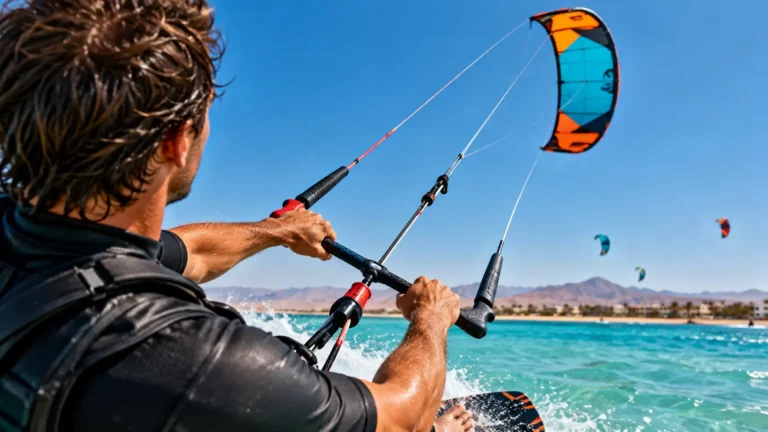
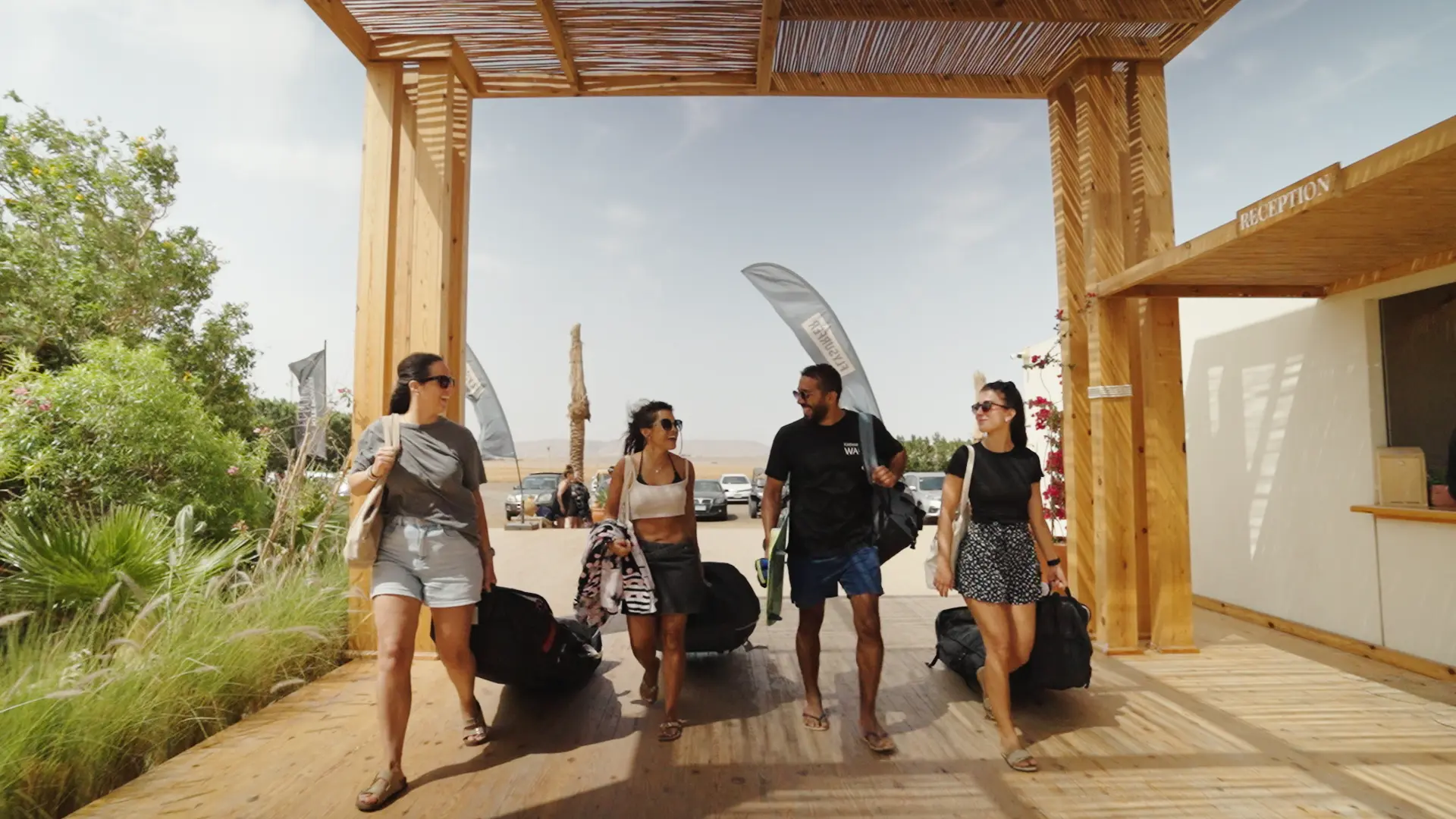
Starting something new can feel overwhelming, especially when it involves wind, water, and equipment. That’s why many first-time riders ask the same question: how to kiteboard as easily and safely as possible?
The good news is that kiteboarding follows a clear, step-by-step learning process. With the right guidance and conditions, most beginners can go from zero experience to their first rides within just a few days.
How To Kiteboard For Beginners
Kiteboarding for beginners is learned in stages, focusing first on kite control before getting on the board.
The basic process includes:
- Learning how wind works
- Controlling the kite on land
- Practicing in shallow water
- Body dragging without a board
- Starting your first rides
Each step builds confidence and prepares you for the next stage.
Beginners learn kiteboarding step by step, starting with kite control, then practicing in the water, and finally riding on the board. Most people begin riding within 3–5 days with proper lessons.
Step 1: Understand Wind Basics
Before touching the equipment, beginners learn how wind works.
This includes:
- Wind direction
- Safe riding zones
- How wind affects the kite
Understanding wind is essential for both safety and control.
Step 2: Learn Kite Control On Land
Kite control is the foundation of kiteboarding.
Beginners practice:
- Steering the kite
- Keeping it stable in the air
- Understanding power zones
This step helps you feel comfortable before entering the water
Step 3: Practice In The Water
Once you’re comfortable on land, training moves into shallow water.
You will learn:
- Water relaunch techniques
- How to control the kite in water
- Movement without the board
This stage builds confidence in real conditions.
Step 4: Body Dragging
Body dragging means moving through the water without a board.
You practice:
- Moving forward using the kite
- Controlling direction
- Recovering your board
This step is important before riding.
Step 5: First Board Starts
This is where kiteboarding starts to feel real.
Beginners learn:
- Getting up on the board
- Maintaining balance
- Riding short distances
Most riders achieve their first rides at this stage.
Step 6: Improve Control And Ride Longer
After your first rides, the focus shifts to:
- Riding in both directions
- Improving stability
- Learning basic upwind control
This is where beginners start becoming independent riders.
Why Learning With Lessons Is Important
Kiteboarding is not recommended as a self-taught sport.
Lessons help you:
- Learn faster
- Stay safe
- Avoid common mistakes
At Kiteboarding Ways, all beginner programs follow a structured system with certified instructors to ensure safe and efficient progression.
Why Egypt Is One Of The Best Places To Learn
For beginners, Egypt offers ideal learning conditions.
The Red Sea provides:
- Consistent wind
- Flat, shallow lagoons
- Warm water
These factors make learning easier and more comfortable compared to many other destinations. At Kiteboarding Ways, lessons are designed around these conditions to help beginners progress quickly.
Common Mistakes Beginners Make
Many beginners struggle with:
- Trying to skip steps
- Over-controlling the kite
- Not relaxing during sessions
- Ignoring instructor guidance
Following the proper process helps avoid these issues.
Tips To Learn Kiteboarding Faster
If you want to progress quickly:
- Take lessons on consecutive days
- Focus on kite control first
- Practice in consistent wind conditions
- Stay patient and relaxed
Consistency is the key to faster learning.
Why do many international riders learn kiteboarding
Many riders traveling from Europe choose Kiteboarding Ways because it simplifies the entire learning process.
Our programs offer:
- Certified instructors (IKO & VDWS)
- Safe lagoon conditions
- Step-by-step progression
- Equipment suited for beginners
For international visitors with limited time, this ensures faster and more enjoyable learning.
After learning the basics, riders can continue their journey at a kite camp in El Gouna or advance their skills on a Red Sea kite safari.
Plan Your First Kiteboarding Experience
If you’re planning your first kiteboarding trip, choosing the right location and lesson structure is essential.
At Kiteboarding Ways, beginners are guided step by step, from their first kite control session to their first successful rides on the water.
Booking your lessons in advance is recommended, especially during peak travel months.
Final Thoughts
Learning how to kiteboard may seem complex at first, but once you follow the right steps, the process becomes much easier to understand. Each stage builds naturally on the previous one, helping you gain confidence and control over time.
With the right conditions and proper instruction, most beginners quickly move from their first attempts to real riding experiences, making kiteboarding an achievable and rewarding sport to learn.
Frequently Asked Questions
How Do Beginners Start Kiteboarding?
Beginners start by learning kite control on land before moving into the water. With step-by-step lessons, they gradually progress to riding on the board.
How Long Does It Take To Learn Kiteboarding?
Most beginners take 3–5 days to start riding. With consistent lessons, they can become independent within a week.
Is Kiteboarding Safe For Beginners?
Yes, when learned with professional instruction and in safe conditions. Proper lessons reduce risks significantly.
Can I Teach Myself Kiteboarding?
No, it is not recommended. Learning with certified instructors ensures safety and faster progress.