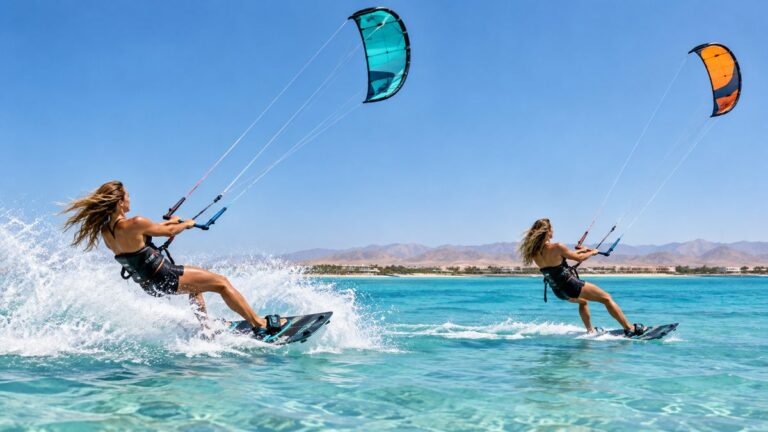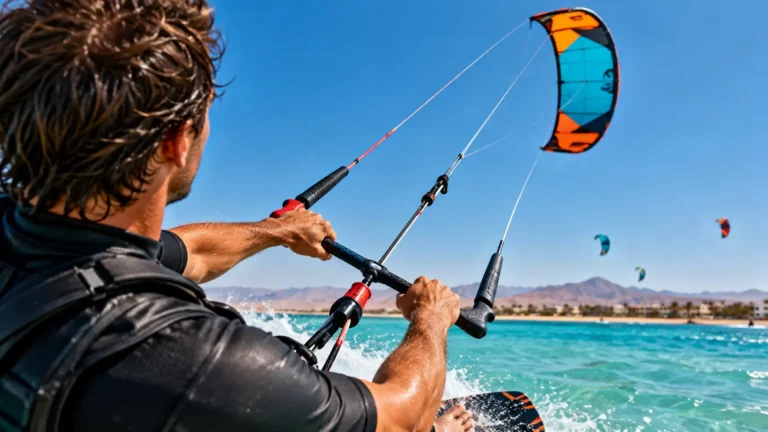
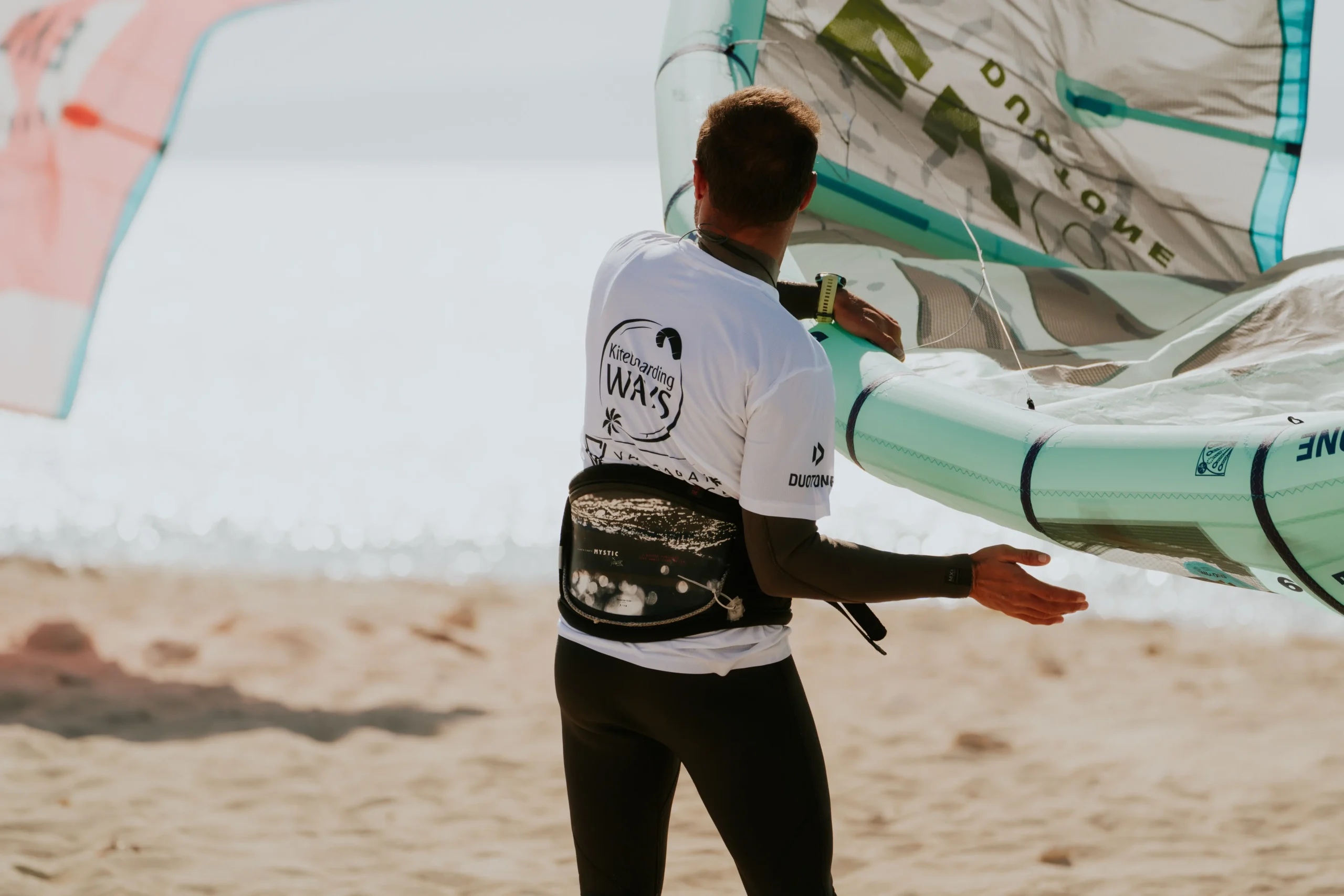
For many beginners planning their first kitesurfing trip, one question immediately arises: Is kitesurfing dangerous?
At first glance, the sport can look intimidating. Large kites pull riders across open water, powered by strong winds. However, the reality is very different from what many first-time observers assume.
When practiced with proper instruction, modern equipment, and safe riding locations, kite surfing is considered a controlled and relatively safe wind sport. Every year, thousands of riders travel from Germany, the UK, France, Switzerland, and other European countries to Egypt’s Red Sea to learn kiteboarding in safe lagoon environments.
Understanding how the sport works and how risks are managed helps beginners approach kite surfing with confidence rather than fear.
Is Kite Surfing Dangerous?
Kite surfing is not considered dangerous when proper training and safety practices are followed. Most accidents occur when riders skip lessons, ride in unsafe wind conditions, or use incorrect equipment.
Professional instruction and modern kite safety systems have significantly reduced the risk level compared to the sport’s early days.
Key safety factors include:
- Learning with certified instructors
- Understanding wind conditions
- Using modern equipment with quick-release systems
- Riding in beginner-friendly locations
Because of these improvements, kite surfing is now widely taught in structured schools around the world.
Why Kite Surfing Looks More Dangerous Than It Is
Kite surfing often appears extreme to beginners because of the visible power of the kite. In reality, beginners are introduced to the sport gradually through controlled learning steps.
Most professional lessons begin with:
- Wind theory and safety rules
- Practicing kite control on the beach
- Learning emergency release systems
- Body dragging in shallow water
Only after riders demonstrate proper control do instructors introduce board riding.
At Kiteboarding Ways, this structured progression helps beginners build confidence while minimizing risk during the learning process.
The Real Risks In Kite Surfing
Like any wind sport, kite surfing does involve some risks. However, understanding these risks helps riders avoid them.
Loss Of Kite Control
Beginners sometimes struggle with power management when learning to fly the kite. Proper instruction teaches riders how to control power safely.
Riding In Strong Wind Conditions
Wind conditions that exceed a rider’s skill level can create dangerous situations. Professional schools monitor wind forecasts carefully before running sessions.
Crowded Launch Areas
Busy beaches increase the chance of collisions. Wide open lagoons provide much safer riding space for beginners.
These risks are greatly reduced when riders learn in controlled environments.
Why Learning Location Matters For Safety
Where you learn kite surfing plays a major role in safety.
Some locations offer ideal beginner conditions, such as steady wind, shallow water, and wide open riding areas. These environments allow riders to practice safely without obstacles.
Egypt’s Red Sea has become one of the world’s most popular kitesurfing destinations because it provides exactly these conditions.
Areas such as El Gouna offer:
- Shallow flat-water lagoons
- Reliable wind systems
- Large open riding areas
- Professional kite schools
Because of these natural advantages, many travelers from Europe choose Egypt for their first kiteboarding experience.
Is Kite Surfing Safe For Beginners?
Yes, kite surfing can be safe for beginners when lessons are taken with qualified instructors.
Professional training programs focus on building essential skills before riders progress to independent riding.
Beginners typically learn:
- Wind theory and safety rules
- Kite control fundamentals
- Body dragging techniques
- Safe board starts
At Kiteboarding Ways, beginner programs are designed specifically to help international riders learn safely in shallow lagoon conditions while progressing step by step.
Why Many International Riders Learn Kiteboarding Ways
Many riders traveling from Europe prefer learning with Kiteboarding Ways because the Red Sea provides ideal learning conditions combined with structured instruction.
Programs focus on:
- Safe shallow lagoons
- Small student groups
- Experienced instructors
- Consistent wind conditions
For international travelers visiting Egypt for a short kiteboarding holiday, this structured approach helps maximize both safety and progression.
In addition to lessons, Kiteboarding Ways also offers kite camps and Red Sea kite safari experiences for riders who want to continue improving their skills.
Beginner Safety Tips For Kite Surfing
Following a few simple safety practices significantly reduces risk.
Helpful tips include:
- Always take professional lessons first
- Check wind conditions before launching
- Use modern equipment with working safety systems
- Avoid riding beyond your skill level
- Stay clear of crowded launch zones
Experienced riders follow these principles in every session.
Final Thoughts
So, is kite surfing dangerous?
Like any wind sport, kite surfing carries some risk. However, with proper training, modern safety systems, and beginner-friendly locations, it is widely considered a safe and highly rewarding sport.
For many international riders visiting Egypt, learning in the Red Sea’s shallow lagoons offers one of the safest and most enjoyable environments to begin kiteboarding.
With the right preparation and professional guidance from Kiteboarding Ways, beginners can safely progress from their first kite control session to confident riding on the water.
Frequently Asked Questions
Is Kite Surfing Dangerous For Beginners?
Kite surfing can be safe for beginners when they learn with certified instructors and follow proper safety procedures.
What Is The Biggest Danger In Kite Surfing?
The most common risk comes from losing kite control or riding in wind conditions beyond your skill level.
Do Beginners Need Lessons For Kite Surfing?
Yes. Professional lessons are essential for learning kite control, safety systems, and wind awareness.
What Wind Speed Is Safe For Beginner Kite Surfers?
Most beginners learn safely in winds between 12 and 20 knots, which provide enough power without being overwhelming.
How Long Does It Take To Learn Kite Surfing?
Most beginners require 8–12 hours of lessons to become independent riders, depending on wind conditions and practice time.
Is Egypt A Safe Place To Learn Kite Surfing?
Yes. Egypt’s Red Sea lagoons offer shallow water, steady wind, and wide open riding areas, making them ideal for beginners.