Is Kitesurfing Hard to Learn? A Roadmap to Kitesurf with Confidence
If you’re dreaming about gliding across crystal-clear water with a kite pulling you forward — but quietly wondering, “Is kitesurfing hard to learn?”
Then, you’re not alone!
The short answer?
No, kitesurfing isn’t as hard as it looks, but it’s not something you master in an hour either. It’s a sport with a unique learning curve: technical at first, incredibly rewarding after.
In this deep-dive guide, we’ll walk you through:
- Why kitesurfing feels difficult (and why it’s not)
- What beginners actually struggle with
- The exact steps to build confidence
- How long it really takes to learn
- What makes El Gouna a perfect place to start
By the end of this article, you’ll have a clear, grounded view of the learning journey — and the confidence to begin.
🏄♀️ Ready to take your first step? Explore our beginner lessons in El Gouna
Is Kitesurfing Hard? Understanding the Learning Curve
Kitesurfing has a unique mix of elements:
- Wind understanding
- Kite control
- Body positioning
- Timing with board and kite
- Safety awareness
These don’t come naturally all at once — which is why kitesurfing has a steeper entry phase, but becomes easy once the basics click.
Think of it like learning to ride a bicycle with wind instead of pedals.
At first it’s all balance, crashes, and confusion — then suddenly it works.
The 3 Phases of Learning Kitesurfing
Let’s break down what the real journey looks like:
Phase 1: Building Kite Awareness (Hours 1–3)
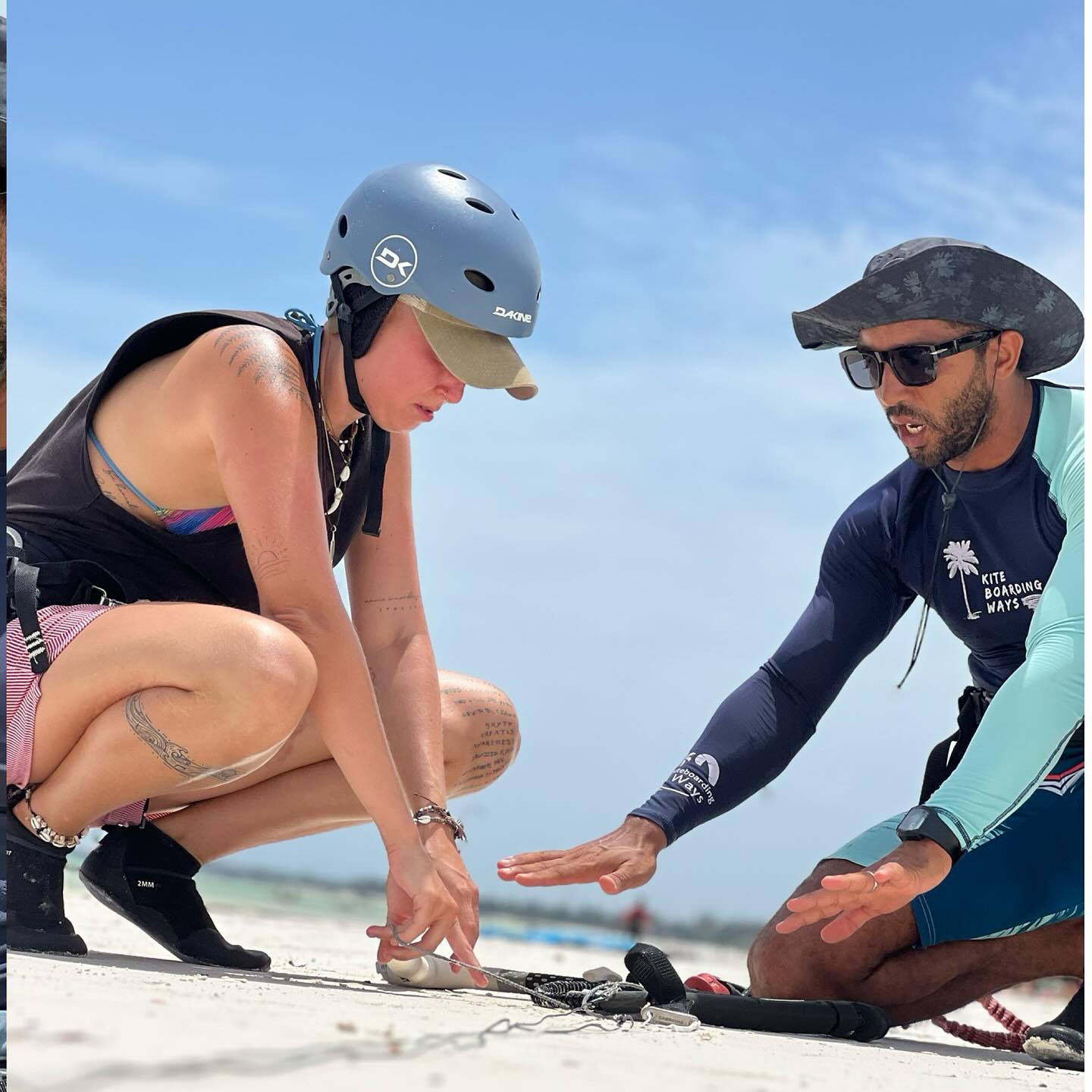
You’ll start on the beach with a trainer or inflatable kite:
- Understand the wind window
- Control power zones safely
- Practice steering with both hands
- Learn launch/relaunch techniques
- Use the quick-release & safety leash
This is where most of the mental effort is. Once you trust the kite, everything else flows faster.
Phase 2: Water Control & Body Dragging (Hours 3–6)
Time to get wet. You’ll:
- Learn how the kite moves your body through water
- Control direction with your core and kite
- Simulate board recovery
- Practice safe crashes & self-rescue
By the end of this phase, you’ll be moving confidently in the water without a board — a huge milestone for beginners.
Phase 3: Water Starts & Early Riding (Hours 6–12)
Here’s where it all comes together:
- Managing the board in the water
- Coordinating kite dive + board angle
- Getting up on your feet
- Gliding short distances
- Balancing speed, power, and control
This phase is where learners experience “micro-successes” — short glides, standing up briefly, or switching direction. These keep you motivated.
🔄 Kitesurfing vs Other Sports: Is it Harder?
Let’s compare:
| Sport | Learning Curve | Beginner Confidence |
| Windsurfing | Slower – heavier gear | ❌ |
| Wakeboarding | Fast to stand, but no control | ✅ but dependent on boat |
| Surfing | Slow – long paddling & timing | ❌ |
| Kitesurfing | Medium-fast – mental to physical | ✅ after 6–10 hours |
You don’t need strong arms or board sport experience — just patience, a good coach, and the right spot.
🌍 Why El Gouna, Egypt is the Best Place to Learn Kitesurfing?
Kitesurfing is only hard when the location works against you.
El Gouna offers the opposite:
✅ Steady side-onshore wind
✅ Flat, shallow lagoons you can stand in
✅ Warm water and sunny weather
✅ No waves or rocks
✅ Experienced instructors and safety teams
✅ Friendly kite community to support you
In other words: it’s a beginner’s dream.
📍 Learn more about our Kitesurfing Camps in El Gouna
How Long Does It Take to Learn Kitesurfing?
Here’s a realistic average for most students:
| Lesson Hours | What You Can Expect |
| 1–3 | Kite control (beach + water) |
| 4–6 | Body dragging and safety mastery |
| 6–9 | First water start attempts |
| 10–12 | Riding both directions short distance |
| 15+ | Independent riding + transitions |
⚠️ Every learner is different. Some get up in 4 hours. Others take 10. That’s normal.
What Beginners Struggle With — And How to Fix It?
| Challenge | Tip to Overcome |
| Crashing the kite | Don’t oversteer. Stay calm and reset. |
| Losing balance | Keep knees bent, weight back |
| Timing the dive wrong | Practice with a coach. Watch your front hand. |
| Fear of pulling too hard | Trust your harness — it absorbs the pull |
✅ Most issues disappear after your 3rd or 4th hour of water practice.
💬 What Do Kiteboarding-Ways Beginners Actually Say?
“It felt overwhelming on the beach, but once I was in the water, it started to make sense. I was riding by Day 3.”
— Luca, Italy
“I thought I’d be terrible, but I had a great coach and that made all the difference. The kite actually felt intuitive!”
— Sarah, Netherlands
👣 Tips to Make Learning Kitesurfing, Easier:
- Choose flat water & side-on wind
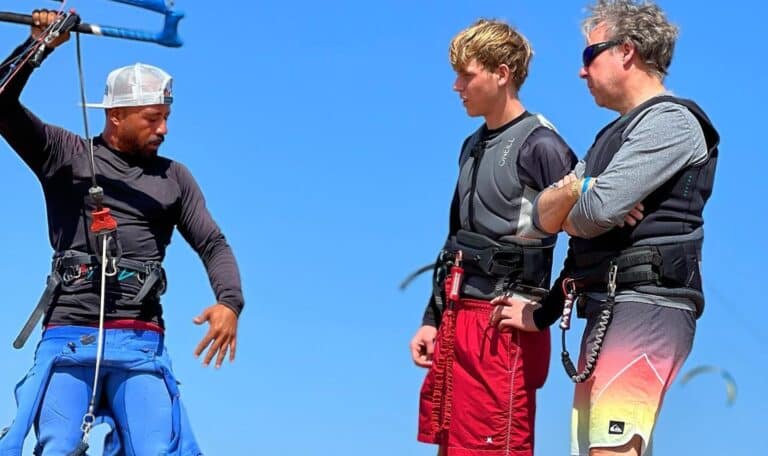
- Take private or semi-private lessons
- Start with a full 3-day camp if possible
- Record yourself — visual feedback helps
- Rest between sessions — your brain needs recovery
- Ask questions constantly
✅ The Verdict: Kitesurfing Is Challenging… Then Addictive
Kitesurfing is not “easy.” But it is learnable, logical, and massively rewarding.
Once you ride your first 10 meters, you’ll be hooked — and every wipeout will feel worth it.
In the right environment, with good instructors and wind conditions, you’ll progress faster than you think.
👉 Ready to try? Book your first kiteboarding lesson now
FAQs: Is Kitesurfing Hard?
Do I need to be fit?
You need average fitness and basic swimming ability. Strength is not essential — it’s about control.
What age is too old to learn?
There isn’t one. We’ve taught riders from 12 to 65+. If you’re healthy, you can kite.
Can I learn on my own?
No. It’s unsafe and slow. You’ll learn faster (and safer) with certified instructors.
How fast can I ride on my own?
Most reach independent rider status after 10–15 hours of structured lessons.