For many international riders, booking a one-week kite safari in Egypt starts as a simple kitesurfing trip idea. But once the yacht leaves the marina and the coastline slowly disappears behind the Red Sea horizon, the experience quickly becomes something much bigger than a normal vacation.
A kite safari is not built around hotel comfort, nightlife, or sightseeing schedules. It is built around wind, movement, remote lagoons, and spending as much time on the water as possible. Days become simpler, routines become calmer, and the entire week slowly starts revolving around forecasts, riding sessions, and life onboard.
For riders traveling from Germany, France, the UK, Switzerland, Italy, or other international destinations, understanding what a real safari week feels like before booking helps create far more realistic expectations.
Day-By-Day One Week Kite Safari Itinerary
Day 1 – Arrival In Hurghada & Boarding The Yacht
For most international guests, the safari begins at Hurghada International Airport after relatively short direct flights from Europe.
After airport pickup, riders are transferred to the marina where the yacht crew begins preparing for departure. Equipment gets unloaded, cabins are assigned, and riders slowly start meeting the rest of the group for the first time.
The first few hours onboard usually feel relaxed.
Some guests organize gear immediately. Others sit on deck watching the marina while discussing wind forecasts and travel stories. Once the yacht starts moving toward the first lagoon area, the atmosphere changes noticeably.
At this point, the trip stops feeling like ordinary travel and starts feeling like a real Red Sea safari.
Day 2 – The First Full Riding Day
The second day is often when riders fully understand why kite safaris in Egypt feel completely different from regular beach holidays. Mornings usually begin calmly and organized, with breakfast served onboard while the team reviews the latest wind forecast and plans the best riding spot for the day. After selecting the location, riders prepare their equipment before heading into the first morning session, taking advantage of the early conditions and smooth lagoon water.
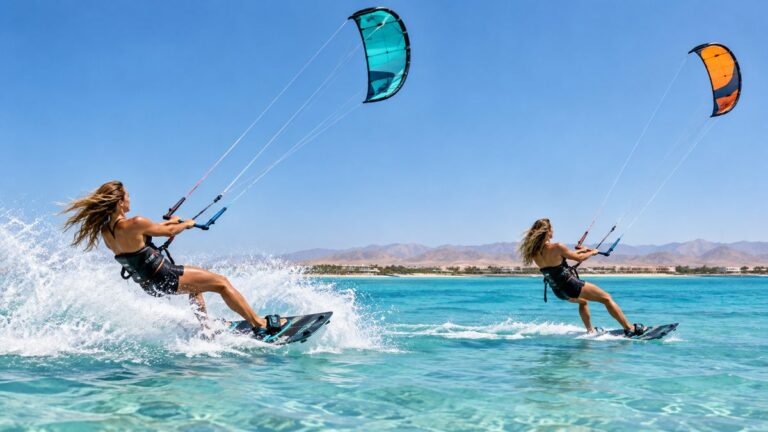
Once the yacht anchors near the riding area, the entire day becomes focused on the water. Instead of crowded beaches and limited launch areas, riders often find:
- huge flat-water lagoons
- uncrowded riding zones
- steady thermal wind
- long uninterrupted runs
- quiet island surroundings
For many first-time guests, this becomes the moment when the safari experience truly starts feeling real.
At Kiteboarding Ways, route decisions are adjusted daily based on real-time wind conditions rather than fixed schedules, helping international riders maximize quality sessions throughout the week.
Day 3 – Settling Into The Safari Rhythm
By the third day, life on board usually starts to feel surprisingly simple and natural. Riders often wake up with the sunrise, check the wind conditions before breakfast, prepare their gear, head out for a session, recover, and then repeat the process later in the day. After a couple of days at sea, many guests begin disconnecting from their normal routines almost completely.
Phones get checked less, schedules start feeling unimportant, and the focus shifts almost entirely toward wind quality, riding progression, recovery between sessions, and exploring new lagoons across the Red Sea. This simple rhythm is one of the main reasons many experienced riders return to Egypt again and again for kite safaris.
Day 4 – Peak Safari Flow
For many riders, the middle of the week becomes the emotional high point of the entire safari experience. By this stage, confidence on the water usually improves, crashes become less frequent, and riders begin feeling physically adapted to the daily rhythm of riding and recovery. The atmosphere onboard also changes as the group dynamic becomes stronger and everyone settles into the flow of the trip.
This is often the period when progression accelerates the most. Riders naturally begin pushing themselves further through longer freeride sessions, carving practice, transitions, foil riding, freestyle attempts, and even small downwinders between lagoons. The combination of steady wind, flat water, and multiple sessions each day creates an environment where progression can happen surprisingly quickly.
Day 5 – Exploring New Lagoons Based On Wind Conditions
One of the biggest advantages of a kite safari is mobility. Unlike fixed kite camps, where riders stay at the same beach every day, a safari can relocate depending on wind forecasts and lagoon conditions. If stronger winds develop in another area of the Red Sea, the yacht can simply move to a better location. This flexibility is one of the main reasons experienced riders often prefer safaris over traditional hotel-based kite trips.
Depending on the conditions, Day 5 may include exploring remote lagoons, sunset freeride sessions, long downwind runs, island BBQ stops, or stronger thermal wind sessions in more exposed areas. No two safari weeks are ever the same, which is part of what keeps the experience exciting even for returning riders who have visited Egypt multiple times.
Day 6 – The Final Full Riding Day
The final full day usually feels very different emotionally.
By this stage, riders know the group well, the yacht already feels familiar, and the rhythm of the week has become completely natural. Most guests try to maximize every remaining session before returning to the marina later that evening.
This day often includes:
- the longest sessions of the week
- group photos and drone footage
- sunset riding
- relaxed dinners onboard
- conversations about future safari trips
For many international riders, this becomes the most memorable day of the entire experience.
Day 7 – Return To The Marina & Departure
The final morning of the safari is usually quieter and more relaxed compared to the earlier days of the trip. Riders begin packing their gear while wetsuits and equipment dry across the deck under the morning sun. Before airport transfers begin, guests often exchange photos, Instagram accounts, and travel stories gathered throughout the week.
Interestingly, many riders say the safari feels both extremely long and surprisingly short. After spending several days focused almost entirely on wind conditions, riding sessions, and life at sea, returning to airports and normal daily routines can feel strangely disconnected from the experience they just had on the Red Sea.
What Most Riders Don’t Expect Before Their First Safari
One of the biggest surprises for first-time guests is how disconnected the experience feels from normal daily life. Once the safari settles into its rhythm, there are far fewer distractions, less noise, and almost no sense of rushing from one task to another. Life onboard becomes simple in a way many riders are not used to during regular travel.
The routine often revolves around just a few things: waking up with the sun, riding, eating, recovering, and repeating the process later in the day. For many guests, this simplicity becomes one of the most valuable and memorable parts of the entire kite safari experience.
Is A One-Week Kite Safari Physically Demanding?
Yes, more than many riders initially expect. During strong wind periods, riders may spend several hours per day on the water, sometimes across multiple sessions.
A typical safari week often includes:
| Physical Demands | Typical Level |
| Daily riding time | High |
| Sun exposure | High |
| Physical fatigue | Moderate to high |
| Recovery importance | Very important |
| Water time consistency | Extremely high |
Preparing physically before the trip can significantly improve the overall experience.
What Riders Usually Pack For A One-Week Safari
Most international riders pack lighter than expected, but a few essentials make a big difference during the week.
Common safari essentials include:
- kite gear and spare parts
- harness and impact vest
- rash guards or light wetsuits
- reef-safe sunscreen
- sunglasses with straps
- dry bags for electronics
- lightweight evening clothing
Because riders spend most of the week either on the water or onboard, simple and practical gear usually works best.
Who Usually Enjoys A One-Week Safari Most?
A one-week Red Sea safari is generally best suited for riders who already feel comfortable riding independently.
The experience works especially well for:
- intermediate riders
- advanced freeriders
- foil riders
- progression-focused travelers
- riders wanting maximum water time
Complete beginners usually benefit more from structured Kitesurfing Lessons in Egypt before joining a safari environment later.
Why Riders Keep Returning To Egypt For Kite Safaris
Egypt continues to attract international riders because the overall experience is difficult to match in many other kiteboarding destinations. The Red Sea offers a rare combination of reliable wind conditions, warm temperatures, flat shallow lagoons, relatively short flights from Europe, affordable travel costs, and a long riding season that extends across much of the year.
For many riders, a successful Red Sea kite safari becomes the standard they compare future kite trips against. The consistency of the wind, the freedom of life onboard, and the unique lagoon experience often leave a lasting impression long after the trip ends.
The Kiteboarding Ways Safari Experience
At Kiteboarding Ways, our safari weeks are designed around real riding conditions rather than rigid tourist schedules.
Instead of following fixed routes regardless of weather, we focus on:
- realistic wind planning
- flexible lagoon selection
- small rider groups
- smooth airport coordination
- safe and organized logistics
This approach helps international riders spend less time worrying about planning and more time enjoying the actual Red Sea experience.
Final Thoughts
A one-week kite safari is not simply another kitesurfing holiday in Egypt. It is a full immersion into life on the Red Sea, where each day becomes shaped by wind, movement, and long hours on the water.
For riders looking to escape crowded beaches, maximize riding time, and experience some of the most consistent lagoons in the world, spending a full week moving through the Red Sea often becomes far more memorable than they initially expected.
Frequently Asked Questions
How Long Is A Typical Red Sea Kite Safari?
Most kite safaris in Egypt last between 5 and 7 days, depending on the route and package.
Do Kite Safari Routes Change During The Week?
Yes. Routes are often adjusted based on wind forecasts and lagoon conditions.
Is A One-Week Safari Physically Tiring?
It can be physically demanding because riders often spend several hours on the water every day.
Can Beginners Join A One-Week Kite Safari?
Usually, safaris are best suited for riders who already feel comfortable riding independently.