

No one becomes a confident rider overnight. Every kitesurfer—no matter how skilled—started with tangled lines, failed water starts, and countless crashes. The good news? Most kitesurfing beginner mistakes are easy to fix once you know what’s causing them.
In this guide, the instructors at Kiteboarding Ways in El Gouna, Egypt, share professional learn kitesurfing tips to help you progress faster, stay safe, and actually enjoy your early sessions.
1. Skipping Professional Lessons
Why It’s a Mistake
Trying to teach yourself may seem cheaper, but it’s one of the biggest kitesurfing beginner mistakes. Without proper supervision, you risk poor habits, unsafe launching, and slower progress.
How to Avoid It
Invest in certified lessons. At Kiteboarding Ways, IKO-certified instructors teach step by step, making sure you master control and safety from day one. Professional guidance reduces frustration and keeps your confidence high.
2. Ignoring Wind and Weather
Why It’s a Kitesurfing Beginner Mistakes
New riders often overlook the importance of wind direction and speed. Launching in offshore or gusty conditions can end a session—or your gear—quickly.
How to Avoid It
- Check apps like Windguru or Windy before heading out.
- Beginners should aim for 15–25 knots with side-onshore wind.
- Ask your instructor to assess the day’s conditions.
Egypt’s Red Sea delivers over 300 windy days a year, making it a perfect place to learn safely and avoid these common kitesurfing beginner mistakes.
3. Choosing the Wrong Kite Size
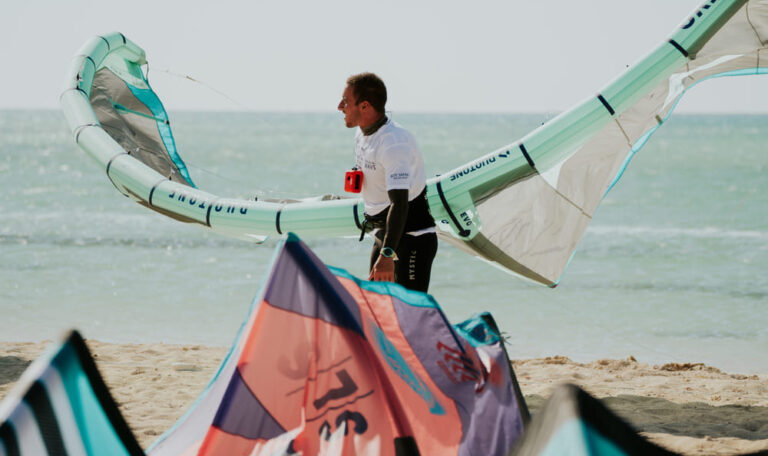
Why It’s a Kitesurfing Beginner Mistakes
Using a kite that’s too big for your weight or the wind speed leads to overpowering, drag, and dangerous lift-offs.
How to Avoid It
Learn the basic wind–kite-size chart during your lessons. Kiteboarding Ways always adjusts kite size to match the student’s level, weight, and the day’s forecast. That’s one of the simplest yet most effective learn kitesurfing tips for safety and performance.
4. Forgetting Pre-Flight Safety Checks
Why It’s a Mistake
In their excitement, beginners often rush into the water without checking their lines or safety release systems.
How to Avoid It
- Inspect all connections and bridles.
- Test your quick release before every launch.
- Learn self-rescue skills early.
At Kiteboarding Ways, every course begins with safety routines that soon become second nature—ensuring you never skip a check again.
5. Pulling the Bar Too Much
Why It’s a Mistake
It’s the most classic of all kitesurfing beginner mistakes: pulling the bar in fully. It kills power control and can send you flying unexpectedly.
How to Avoid It
Relax your arms and let the kite breathe. Slight bar tension is enough to stay powered. During lessons, Kiteboarding Ways coaches teach bar feel and finesse—so you control the kite, not the other way around.
6. Looking at the Kite Instead of Where You’re Going
Why It’s a Mistake
If your eyes are on the kite, your body follows it—not your intended direction. This causes imbalance and crashes.
How to Avoid It
Always look where you want to ride, not where the kite is. Your stance and board naturally align. It’s one of those small but powerful learn kitesurfing tips that transforms control and balance instantly.
7. Standing Up Too Early
Why It’s a Mistake
Beginners often try to stand before the kite lifts them, making them lose speed and sink.
How to Avoid It
Let the kite pull first—then rise smoothly. Keep your front leg bent and back leg extended to maintain direction. Kiteboarding Ways instructors repeat this movement until your timing feels automatic.
8. Not Controlling Speed Properly

Why It’s a Kitesurfing Beginner Mistakes
Once you start riding, you might find yourself going too fast without knowing how to slow down or edge correctly.
How to Avoid It
- Edge the board to control direction.
- Depower instead of crashing.
- Practice figure-8 movements to manage energy.
At Kiteboarding Ways, you’ll learn controlled edging early so you can build speed safely and master transitions quicker.
9. Neglecting Post-Session Gear Care – Kitesurfing Beginner Mistakes
Why It’s a Kitesurfing Beginner Mistakes
Salt, sand, and heat can ruin kites and lines. Beginners sometimes leave their gear wet or tangled, shortening its life.
How to Avoid It
- Rinse your equipment after every use.
- Store it dry and away from sunlight.
- Do quick inspections before packing.
For guests training at Kiteboarding Ways, on-site gear storage and maintenance keep your setup ready for every session.
10. Not Asking for Feedback

Why It’s a Kitesurfing Beginner Mistakes
Progress stops when you stop learning. Many riders repeat mistakes because they don’t ask for corrections.
How to Avoid It
Ask for feedback after each session. At Kiteboarding Ways, instructors use video analysis and one-on-one coaching to highlight exactly what to improve next. It’s one of the most valuable learn kitesurfing tips you’ll ever get.
Quick Recap – Common Kitesurfing Beginner Mistakes
- Skipping lessons
- Ignoring wind direction
- Oversized kites
- Skipping safety checks
- Over-pulling the bar
- Looking at the kite
- Standing too early
- Failing to edge
- Poor gear care
- Not seeking feedback
Each one is easy to fix—with guidance, consistency, and the right training environment.
Conclusion – Turn Kitesurfing Beginner Mistakes into Progress
Every rider starts with mistakes—but the right mindset and coaching turn them into milestones. By recognizing these kitesurfing beginner mistakes early and following expert learn kitesurfing tips, you’ll ride faster, safer, and with more confidence.
If you’re planning to start or refresh your training, Kiteboarding Ways in El Gouna offers everything you need: certified instructors, reliable wind, premium gear, and a supportive community that helps you grow from your first launch to your first jump.
👉 Ready to begin?
Book your beginner lesson with Kiteboarding Ways and transform your learning curve into your first successful ride.
FAQs – Kitesurfing Beginner Mistakes
Q1: What are the most common kitesurfing beginner mistakes?
Over-pulling the bar, using the wrong kite size, ignoring wind conditions, and skipping safety checks are among the top issues.
Q2: How can I avoid kitesurfing beginner mistakes?
Take professional lessons, check wind forecasts, and practice under supervision at certified schools like Kiteboarding Ways.
Q3: What are the best learn kitesurfing tips for beginners?
Focus on bar control, look where you ride, start small, and stay consistent—progress comes with time.
Q4: How long does it take to learn kitesurfing?
Most riders can ride both directions within 3–5 days of structured lessons.